


Youth Risk Behavior Survey Policy Brief Series: Diet and Activity
This is the final policy brief in a three-part series that summarizes key findings from the Youth Risk Behavior Survey (YRBS) for high school students in the Houston Independent School District (HISD). The first two focused on mental health and substance use, while this brief discusses trends in dietary and physical activity levels among HISD high school students from 2011 to 2023.
Overview
This policy brief uses data from the YRBS to examine trends in nutrition, weight, and physical activity among high school students in the Houston Independent School District (HISD). HISD student outcomes are compared with national results from 2011 to 2023. The findings indicate that HISD students face greater health-related challenges than their national peers:
- Higher obesity rates: Obesity levels are more prevalent among HISD students.
- Sharper breakfast decline: Regular morning meal consumption has dropped significantly.
- Lower produce intake: Daily fruit and vegetable consumption has decreased.
- Reduced physical activity: Daily physical activity and organized sports participation have fallen.
Taken together, these patterns point to significant barriers to healthy eating and physical activity that extend beyond the school day. Declines in breakfast consumption and lower participation in physical activity suggest gaps in access to nutrition and safe, affordable opportunities for exercise. These gaps may be particularly pronounced for economically disadvantaged students, who make up the majority of HISD enrollment. Food insecurity and physical inactivity have implications for both short- and long-term health, including increased risk of obesity, chronic disease, and poorer academic outcomes.
While HISD has established programs for free meals and after-school activities, promoting healthy diet and exercise habits is just one of many competing priorities within its educational mission. Given the district’s size and the broader environment in which it operates — including high poverty rates and widespread food deserts — ensuring reliable access to nutritious meals and physical activity is too large a task for it to handle alone. Additional government support is needed to bolster HISD’s health initiatives.
This brief provides recommendations on how to address challenges identified by the YRBS data. These recommendations draw from existing evidence of programs that can effectively boost youth nutrition and physical activity:
- Establishing a city-wide food insecurity fund.
- Leveraging existing programs that boost student nutrition.
- Expanding after-school physical activity opportunities through programs such as Texas’ Afterschool Centers on Education (ACE).
About the Survey and Methods
TheYouth Risk Behavior Survey (YRBS) is a federally supported, biennial survey administered by the Centers for Disease Control and Prevention (CDC) in partnership with states and selected large urban school districts. The survey collects anonymous, self-reported data from high school students on a range of behaviors related to health and safety, including dietary behaviors, physical activity, and weight status.
This brief draws on YRBS trend data from 2011 through 2023, using the most recent year for which data are publicly available. HISD results are compared with national YRBS estimates, which are based on a separate, weighted sample designed to be nationally representative of U.S. students in grades 9–12.
Several limitations should be noted. YRBS data are self-reported and may be subject to reporting bias. The survey does not directly measure household food insecurity or summer dietary behaviors, and response categories may not capture the full range of physical activities in which students participate. In addition, only aggregate data are available, limiting the ability to assess statistical significance between HISD and national estimates. Despite these limitations, YRBS remains one of the largest and most consistent sources of information on adolescent health behaviors.
Physical Activity and Nutrition: HISD and US Trends
Promoting physical activity and healthy nutrition among high school students is an urgent and growing public health challenge. Nationally, 23.9% of U.S. high school students meet the recommended 60 minutes of daily moderate-to-vigorous physical activity, placing many adolescents at elevated risk for obesity, diabetes, cardiovascular disease, and poor mental health. At the same time, approximately 13.5% of U.S. households experience food insecurity, which is associated with irregular meals, lower diet quality, and adverse health and educational outcomes.
Since 1991, the YRBS has been asking students about their diet and exercise habits. This policy brief uses the YRBS data to compare nutrition, weight, and physical activity trends among HISD high school students with national patterns between 2011 and 2023. HISD is the largest school district in Texas, serving more than 168,000 students, and is among the most diverse districts in the country. During the 2024–25 school year, 77.8% of HISD students were classified as economically disadvantaged, making access to healthy food and safe opportunities for physical activity critical policy priorities.
YRBS data reveal several areas of concern for HISD students:
- Regular breakfast consumption has declined substantially over the study period.
- Fruit and vegetable intake remains lower than national averages.
- Obesity prevalence is consistently higher.
- Physical activity participation — both daily activity and organized sports — is lower than among U.S. high school students overall.
Because these behaviors are shaped by numerous factors, including economic conditions, neighborhood environments, and access to programs outside of school hours, addressing them requires coordinated action by state, local, and community stakeholders. The following analysis examines nutrition and activity trends among HISD students, highlighting their implications for student health. Policy responses designed to meet the observed challenges are proposed.
Weight Status
Table 1 — HISD and US Weight Status Among High School Students, 2011–23
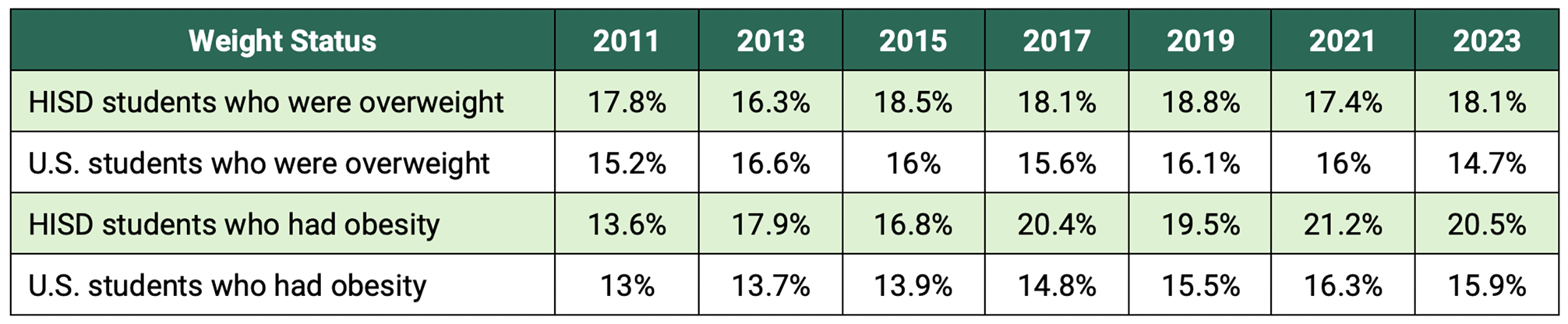
Weight status is calculated using self-reported height and weight measurements to generate body mass index (BMI) percentiles. Students are classified as overweight if their BMI is equal to or higher than 85% of their same-age peers, and as having obesity if it is equal to or higher than 95%.
YRBS data indicate that weight-related challenges are more pronounced among HISD students than U.S. high school students overall. While the percentage of HISD students who reported being overweight remained relatively stable between 2011 and 2023, obesity prevalence increased substantially. In 2011, 13.6% of HISD students reported height and weight measures indicating obesity; by 2023 20.5% of students did, an increase of roughly 51% over the period (Table 1). Nationally, obesity prevalence also increased but at a slower pace, from 13.0% to 15.9% over the same years.
The largest increases in reported obesity prevalence among HISD students occurred between 2013 and 2017 — since then they have remained stable. This suggests that higher obesity rates likely cannot be attributed to the COVID-19 pandemic and its related disruptions to school and home environments. The relatively high obesity rates among HISD students underscore the importance of addressing upstream contributors such as diet quality, meal regularity, neighborhood access to healthy food, and opportunities for physical activity.
Dietary Behaviors
Breakfast Consumption
Table 2 — HISD and US Breakfast Eating Among High School Students, 2013–23
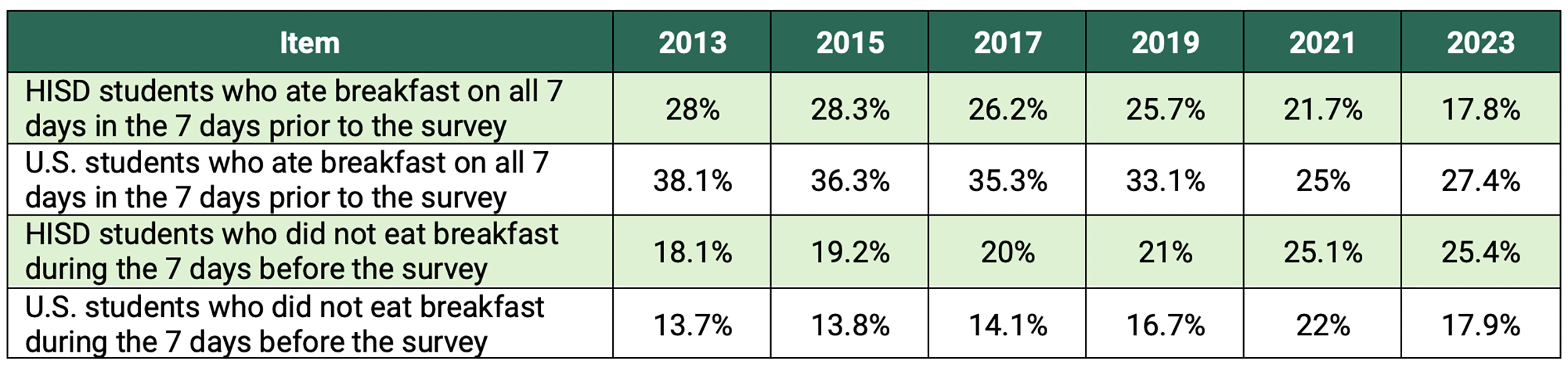
Breakfast consumption declined markedly among HISD students over the study period. In 2013, 28.0% of HISD students reported eating breakfast on all seven days of the week prior to the survey (Table 2). By 2023, that share had fallen to 17.8%, representing a 36.4% decline. Over the same period, the percentage of HISD students who reported not eating breakfast at all during the prior seven days increased 40.3%, from 18.1% to 25.4%.
Nationally, similar but less marked trends were observed. The share of U.S. students eating breakfast daily declined from 31.8% in 2013 to 27.4% in 2023, a 13.8% decrease. These patterns indicate that HISD students are experiencing a sharper reduction in regular meal consumption than their peers nationwide.
Fruit and Vegetable Consumption
Table 3 — HISD and US High School Student Fruit, Fruit Juice, and Vegetable Consumption, 2011–23
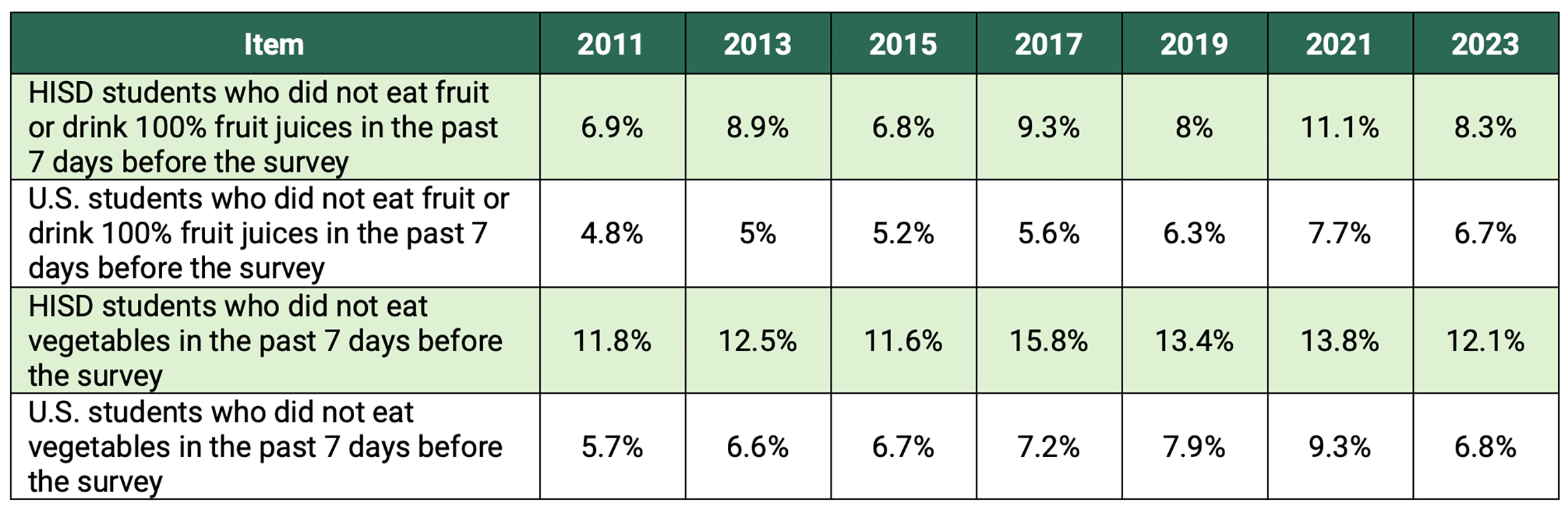
Most students in both the HISD and U.S. samples reported consuming some fruits or vegetables at least once in the seven days prior to the survey. However, HISD students consistently reported lower consumption than the national sample. In 2023, 12.1% of HISD students reported not eating vegetables at all during the prior week, compared with 6.8% nationally (Table 3). Similarly, 8.3% of HISD students reported not consuming fruit or 100% fruit juice, compared with 6.7% nationally.
Physical Activity and Sports Participation
Table 4 — HISD and US High School Students Who Were Physically Active for at Least 60 Minutes, 2011–23
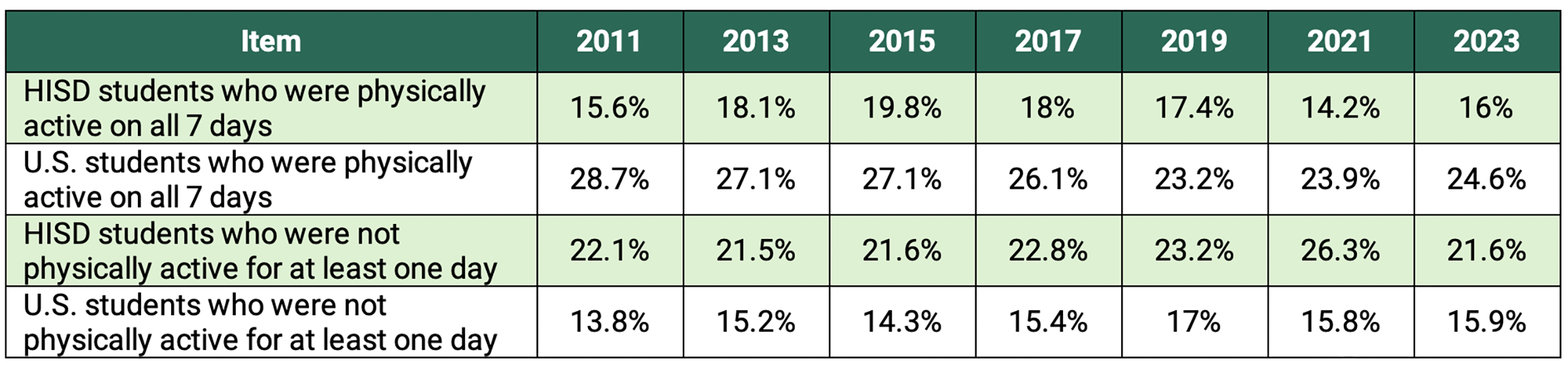
The U.S. Department of Health and Human Services recommends that students get at least 60 minutes of moderate-to-vigorous physical activity daily. HISD students were consistently less likely than U.S. students overall to meet recommended physical activity levels. In 2023, only 16.0% of HISD students reported being physically active for at least 60 minutes on all seven days prior to the survey, compared with 24.6% nationally (Table 4). HISD students were also more likely to report no days of 60-minute physical activity during the prior week.
Table 5 — HISD and US High School Students Who Played on at Least One Sports Team, 2011–23

Participation in organized sports is also less frequent among HISD students. In 2023, 40.3% of HISD students reported playing on at least one sports team, compared with 51.9% nationally (Table 5). HISD sports participation declined sharply between 2015 and 2021, from 46.9% to 35.9%, with only a partial rebound by 2023. National trends during this time period mirrored this trajectory but were less pronounced.
Policy Recommendations
The YRBS findings reveal widening disparities in healthy eating and physical activity between Houston students and their national peers. Most trends in breakfast consumption, weight maintenance, and physical activity have worsened in recent years, suggesting that the Houston school district is facing greater challenges in meeting students’ diet and exercise needs.
These gaps matter not only for youth health and academic performance, but also for the future, as early habits tend to persist into adulthood and shape long-term disease risk. Poor health carries spillover costs for families and the broader community. Improving youth nutrition and physical activity requires coordinated action by schools, as well as city and state governments.
HISD’s current efforts — including free and reduced-price breakfast and lunch during the school year and limited after-school programming — are important. However, these measures alone cannot meet the challenge of ensuring access to healthy meals and safe physical activity for a large, diverse, and socioeconomically disadvantaged population. The following policy initiatives build on HISD’s existing efforts and have demonstrated promise elsewhere in improving student nutrition and physical activity.
Establish a City-Wide Food Insecurity Fund
The YRBS data demonstrates persistent gaps in healthy food consumption among HISD students. Given the high share of economically disadvantaged students in the district, community-wide initiatives are needed to complement district-level efforts to improve student dietary quality.
Other cities have addressed similar challenges by establishing food insecurity funds to provide targeted grants to local organizations. Denver, for example, created a dedicated fund that now serves nearly 200,000 young people annually. Since its inception, local fruit and vegetable consumption has reached its highest level since 2015, rising from below 35% for vegetables and 30% for fruit to approximately 45% for both. Houston could adopt a similar locally tailored program to reduce food insecurity for children throughout the city, extending the reach of existing school-based efforts.
While fiscal constraints may limit the feasibility of a permanent fund in the near term, the city could pilot such an initiative using discretionary funds from district-based council members. A pilot would allow policymakers to assess impact while responding directly to the access challenges reflected in YRBS dietary data.
Leverage Existing Programs That Boost Student Nutrition
The YRBS findings highlight a decline in regular meals and nutritional quality among HISD students, with many skipping breakfast. These figures suggest that many HISD high school students struggle with consistent access to nutritious food, a challenge that can negatively impact learning and health outcomes. Notably, these reductions in nutritional health are occurring during the school year, when students have access to resources like free and reduced-price breakfast and lunch.
The YRBS findings that nutrition habits are declining even during the resource-rich school year suggests that these gaps likely widen during the summer months. Without the structure of school meals, food insecurity is often exacerbated; research indicates that children gain weight two to three times faster during the summer than during the school year. Because consistency is vital to sustaining healthy behaviors, addressing student nutrition throughout the entire calendar year is essential for long-term wellness.
SUN Bucks Program
The federal Summer Electronic Benefits Transfer (EBT) (SUN Bucks) program addresses this seasonal nutrition gap. The voluntary program provides $40 per child per month during the summer via an EBT card, helping families purchase food when school is out. The program has reduced childhood hunger; a pilot study found that very low food insecurity declined by one-third among participating families.
Texas does not currently participate in the SUN Bucks program. Doing so would provide flexible resources directly to families, bridging the gap created by the transportation and on-site meal requirements of HISD’s existing summer feeding efforts. As a statewide, federally-funded program, SUN Bucks would also promote dietary health for students across Texas.
Expand After-School Physical Activity Through Texas Afterschool Centers on Education (ACE)
Physical activity is essential for physical and mental health, and organized sports offer a primary outlet for exercise. However, HISD students report declining rates of physical activity and sports participation, likely due — at least in part — to cost and transportation barriers. These hurdles disproportionately affect Latino students, who comprise the majority of the district’s population. For these youth, promoting physical activity will require solutions that prioritize both convenience and affordability to bridge existing gaps in access.
Research shows that after-school interventions can be effective tools to increase physical activity for children who are overweight or obese, and free programming helps to overcome cost issues. While HISD currently utilizes federal Texas Afterschool Centers on Education (ACE) grants — providing free after-school and summer activities for K-12 students in Title I schools — most programs are geared toward elementary and middle school students. By collaborating with community stakeholders, HISD could follow the lead of other Texas districts and expand ACE programming into high schools — specifically incorporating more physical activity offerings to support older students.
Conclusion
YRBS data show persistent and widening disparities in nutrition and physical activity between HISD students and their national peers. Higher obesity prevalence, declining breakfast consumption, lower fruit and vegetable intake, and reduced physical activity participation highlight the need for coordinated policy responses that extend beyond the school day. While HISD has already implemented several promising initiatives, meaningful improvement will require sustained engagement from state and local policymakers and community partners.
By adopting policy actions that address barriers to healthy eating and physical activity, such as community food access initiatives, summer nutrition support, and expanded after-school physical activity programs, Houston can better support the health and well-being of HISD students and help foster healthier outcomes into adulthood.
This publication was produced by Rice University’s Baker Institute for Public Policy. Wherever feasible, the material was reviewed by outside experts prior to release. Any errors or omissions are solely the responsibility of the author(s).
This material may be quoted or reproduced without prior permission, provided appropriate credit is given to the author(s) and Rice University’s Baker Institute for Public Policy. The views expressed herein are those of the individual author(s) and do not necessarily represent the views of Rice University’s Baker Institute for Public Policy.


