


Mental Health Concerns in Houston Public Schools
This policy brief is the first of three that will highlight major findings from 2023 High School Youth Risk Behavior Survey (YRBS) data for Houston Independent School District (HISD). Specifically, this brief examines trends in mental health, bullying, and student safety from 2011 to 2023 and compares trends in HISD with those in the U.S. It also offers recommendations for how policymakers and HISD leaders can improve student mental health and safety.
The YRBS data present a complex picture of HISD’s school environment. Overall, while HISD students were less likely to report mental health concerns than U.S. students as a whole, they were more likely to report having attempted or made a plan for suicide. The data also demonstrate both an increase in reports of bullying in HISD and a greater percentage of Houston students saying they missed school due to safety concerns compared to national averages. While the challenges that HISD faces are not necessarily unique among U.S. public schools, these trends underscore the need for expanding mental health service delivery in Houston public schools.
Background on Youth Risk Behavior Survey
The YRBS is a biannual, representative survey of high school students’ health risks and practices that is funded by the U.S. Centers for Disease Control and Prevention (CDC). The YRBS provides school administrations, teachers, policymakers, researchers, and parents with information about student behavior across a range of topics, including substance use, school environment, sexual behavior, unintentional injuries, and dietary behaviors. Importantly, it allows respondents to report their behaviors anonymously without concern for punishment, increasing the chances that policymakers and educators can receive a more accurate picture of student conduct inside and outside their school.
The YRBS is not without limitations, especially regarding its pool of respondents. For example, survey respondents only include students actively attending public schools, not those who no longer attend, have withdrawn, or attend alternative schools. Further, the survey does not provide respondents with definitions of various behaviors, potentially causing confusion among students. Despite these limitations, the YRBS remains one of the most consistent measures of student behavior in U.S. schools.
Mental Health and Safety Trends in Houston and US Schools
Mental Health
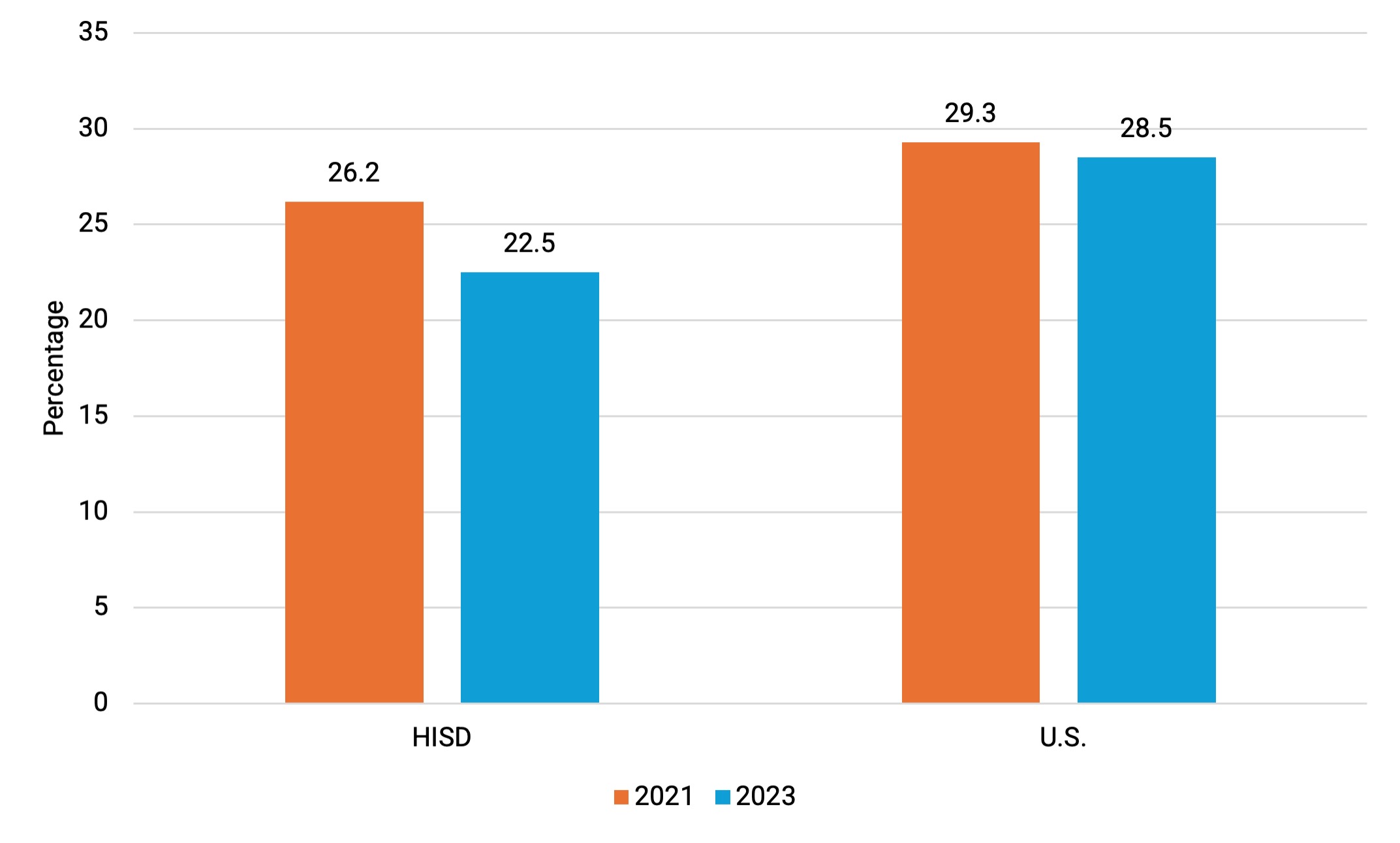
Concerns about adolescents’ mental health have grown considerably over the last two decades. In 2021, the YRBS began asking students if they agreed that “their mental health was most of the time or always not good.” This question can be interpreted as a measure of students’ general sense of their own well-being. Just over one-fifth of HISD students reported experiencing mental health issues in 2023, lower than the national average of 28.5% (Figure 1). In Houston and the U.S., the percentage of students reporting mental health concerns declined from 2021 to 2023. While this is an encouraging sign, a significant percentage of students still report that they struggle with their mental health.
Figure 1 — HISD and US Students Reporting Their Mental Health Was Most of the Time or Always Not Good, 2021 and 2023
Suicidal Behaviors
While student reports of mental health concerns have decreased slightly from 2021 to 2023, national and HISD-specific data demonstrate long-term growth in the share of students who report experiencing more significant manifestations of mental struggles. Specifically, the data illustrate notable increases in the number of students reporting that they have seriously considered, attempted, or made a plan for suicide from 2011 to 2023. These trends are consistent with other research finding that the prevalence of diagnosed mental or behavioral health conditions among adolescents increased 35% between 2016 and 2023 nationally.
Recent rates of students who reported seriously considering suicide are relatively similar between HISD and national samples. However, the percentages of students who have attempted or made a plan for suicide are significantly higher among HISD students in comparison to the national average. For example, nearly 14% of HISD students reported a past-year suicide attempt in 2023, while the rate for U.S. students in that same year is slightly under 10% (Figure 2). Altogether, these statistics underscore the need for interventions that can identify and treat youth experiencing or at risk for negative mental health outcomes.
Figure 2 — HISD and US Suicidal Behaviors Trends, 2011–23

Bullying
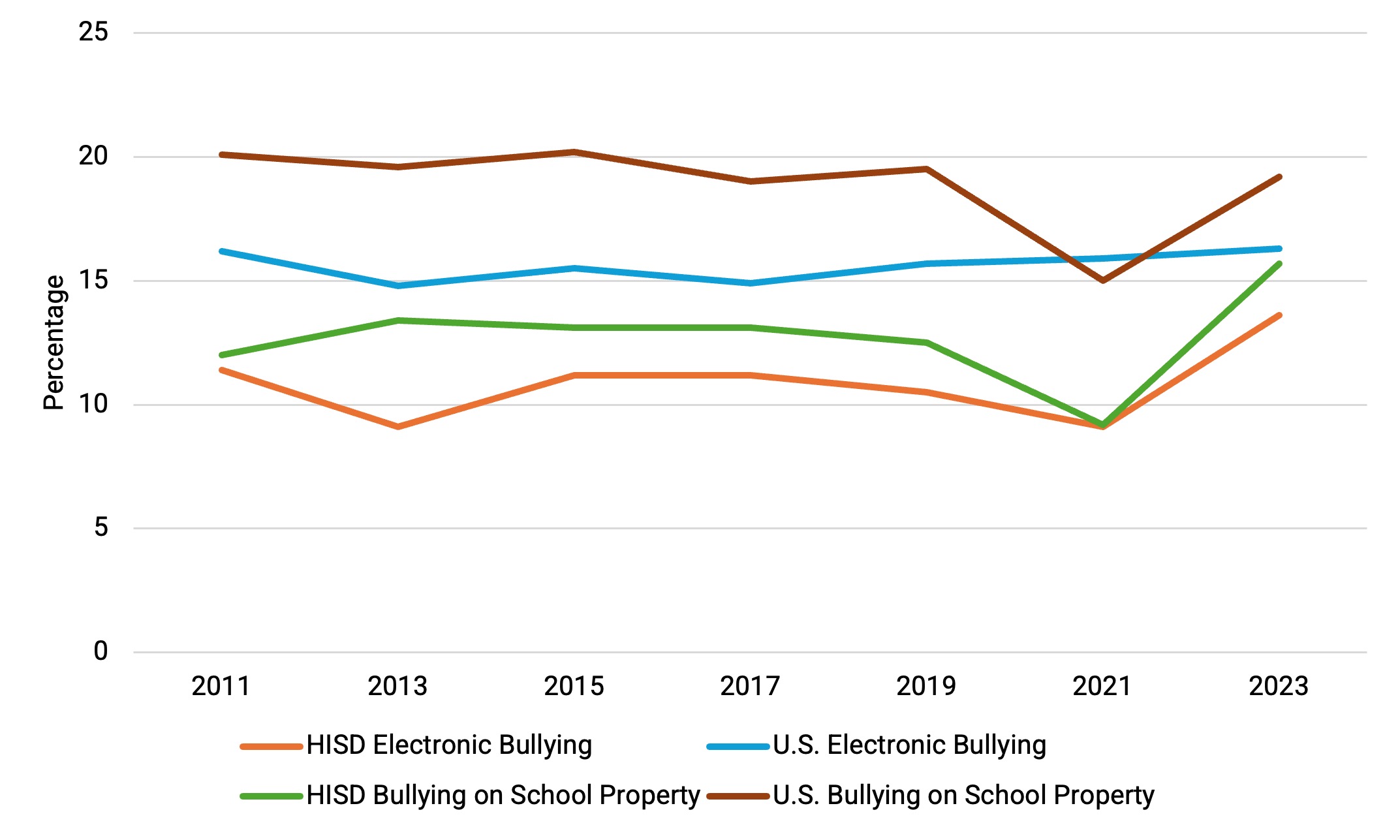
Youth who are bullied have an increased risk for depression, anxiety, lower academic achievement, and other health issues. Reports of bullying on school property and electronic bullying among HISD students are consistently lower than national levels. That said, HISD experienced significant increases in both forms of bullying from 2021 to 2023, a period during which many schools and students were adjusting to the return to classes following closures due to the COVID-19 pandemic. In 2021, approximately 9% of Houston students reported having been bullied on school grounds or electronically. By 2023, 15.7% of HISD students reported bullying on school property, and 13.6% reported electronic bullying (Figure 3).
Figure 3 — HISD and US Bullying Trends, 2011–23
School Safety
Across the U.S. and Houston, the percentage of students who report missing school because they feel unsafe going to school, leaving school, or being on campus has risen significantly since 2011. Rates of reported school safety concerns are more prevalent among HISD students, as 19.3% said they missed school due to feeling unsafe in 2023 (Figure 4). Since 2019, the data also illustrate an increase in the percentage of HISD students who report being physically threatened or injured with a weapon on school property. However, the number of HISD students who stated that they were in a physical fight on campus has declined during the same time period, from 14.5% to 8.4%, which is generally in line with national trends.
Figure 4 — HISD and US School Safety Issue Trends, 2011–23

Policy Recommendations
1. Invest in Fully Funded On-Campus Mental Health Services
YRBS data reporting that HISD students are facing mental health challenges may not be surprising, as national data indicates that adolescent mental health was in decline well before the COVID-19 pandemic. Notable increases in depression also were found among those aged 12 to 17 from 2015 to 2020. The disruptions caused by the COVID-19 pandemic have exacerbated the youth mental health crisis, further complicating educators’ efforts to address worsening student well-being.
Along with the aftereffects of the COVID-19 pandemic, HISD’s ability to meet the mental health needs of its students is also hindered by a significant shortage in school-based mental health services. The district has long struggled to staff schools with an adequate number of counselors. In 2018, HISD had a counselor-to-student ratio of 1 to 1,100, which is several degrees higher than the recommended ratio of 1 counselor for every 250 students. The district addressed this shortage with federal COVID-19 pandemic-related aid, reporting a significantly improved counselor-to-student ratio of 1 to 547 in 2024. Texas schools received $19 billion in federal Elementary and Secondary School Emergency Relief (ESSER) funds, and nearly three-quarters of the state’s school districts, including HISD, used this money to pay for mental health services.
However, emergency relief programs do not provide long-term financial stability. ESSER funds largely expired in 2024, and subsequently, HISD faced a budgetary shortfall of $528 million. Due to these fiscal constraints, in April 2025, HISD announced the elimination of all wraparound service departments, which supported students’ access to basic needs, including food and hygiene products, mentoring, and tutoring support.
Amid personnel and funding shortages, HISD has expanded telehealth services to address student needs. In 2024, the district partnered with the telehealth program Hazel Health to bring virtual health care to all school campuses. Hazel Health connects students with doctors, nurse practitioners, and therapists who can provide mental health support and prescribe medication. This on-campus telehealth service is a crucial resource for students who do not have internet access or privacy and safety at home and who lack the time or access to transportation for in-person doctor visits.
Additionally, HISD opened seven off-campus Sunrise Centers that provide free on-site mental health services, food, school supplies, and clothing. So far, demand for Sunrise Center services has exceeded expectations, suggesting the need to explore options for the program’s expansion to address student needs.
While the district’s Hazel Health and Sunrise Center initiatives are positive developments that can improve mental health and well-being for some students, neither program can fully replace the benefits of in-person care, nor can they address the needs of students with more significant health conditions.
Permanent, on-campus mental health infrastructure is necessary to ensure that HISD can adequately respond to student needs. It will also require funding from the state. While improving student mental health is a bipartisan goal, a significant, long-term financial commitment to this issue has been lacking. In 2023, the Texas legislature passed a relatively narrow bill aimed at addressing the counselor shortage by allowing unlicensed chaplains to serve as counselors. Yet, schools were concerned that chaplains did not have adequate expertise or training, and only one school district has opted to participate in the program. The 2025 Texas legislative session began with a $24 billion surplus, giving legislators an opportunity to make a meaningful financial commitment to improving student mental health.
2. Expand School-Based, Anti-Bullying Interventions and Communications With Parents About Bullying
While YRBS findings suggest that bullying is less prevalent in HISD schools compared to the national average, the district experienced sharper increases in both bullying on school property and electronic bullying from 2021 to 2023. The disruptions caused by the COVID-19 pandemic and the return to in-person instruction may have played a role. COVID-19 pandemic-related shutdowns have been associated with greater levels of anxiety and depression in adolescents and with a diminishment of skills garnered from in-person communication, such as emotional regulation and peer-to-peer interaction, which may increase tendencies for antisocial behaviors.
Additionally, national trends from YRBS data show that bullying has largely returned to levels prior to the COVID-19 pandemic. Thus, the recent increases in bullying across HISD as reported in 2023 YRBS data cannot solely be attributed to COVID-19 pandemic aftereffects.
HISD’s current policy on bullying states, in part, that “students should not engage in harassment conduct, which shall result in disciplinary action.” While policies protecting students from bullying and clarifying the inappropriateness of such behavior are important, disciplinary action may not address the problem effectively. Instead, certain corrective responses to bullying, especially zero tolerance policies, may not address the root causes behind such behavior and may make victims more afraid to report incidents of bullying. Certain disciplinary measures can also impede the educational development of the student responsible for bullying, which can result in negative downstream impacts.
While no single intervention can successfully stop bullying, this behavior is modifiable and responds to several styles of prevention interventions, as studies show. HISD has some programs that can be expanded to address the YRBS’ recent reported increases in bullying. For example, HISD’s Social and Emotional Learning Department provides anti-bullying training that emphasizes informal peer involvement. This approach uses small or whole class discussions to facilitate conversations about in-person and electronic bullying and can help promote an environment that discourages such behavior. However, strategies such as this should be consistently supported over time to ensure that they have a significant impact on preventing and reducing bullying.
Bullying can also be addressed through universal prevention programs that encourage prosocial behavior across multiple areas. Programs that train teachers to actively discuss, identify, and respond to bullying can be especially effective at openly addressing relevant issues and reaching many students. More specific examples include integrating social-emotional lessons with teaching guidelines on digital media use and utilizing counselors to model strategies for teachers to report or respond to bullying.
Providing parents with informational materials on how to recognize and discourage bullying is another effective strategy for addressing this behavior. This outreach strategy is not prevalent in HISD currently; however, it could be implemented with relatively low resource expenditures.
3. Develop Proactive Responses to Safety Concerns and Review the Safety Impact of All Campus Policies
Student safety is essential for fostering an effective learning environment. While the decline in HISD students reporting involvement in physical fights on campus is a positive development, other concerning trends also warrant attention.
Nearly 20% of HISD students reported not attending school because they felt unsafe, causing them to miss critical instruction time. Per the YRBS data for HISD, rising threats of physical violence also contribute to feeling unsafe. The Federal Bureau of Investigation in Houston reported a five-fold rise in school threats in the area at the start of the 2024–25 academic year.
Schools oftentimes experience increases in threats following mass casualty events, especially those on school grounds, which have become notably more commonplace since 2010. This “contagion effect” may be partially driven by social media, which enables the rapid spread of information about mass casualty events among student populations. Social media may also serve as a catalyst for electronic bullying, which is associated with worsening mental health and may potentially drive a cycle of bullying.
A deeper understanding of the precise circumstances surrounding incidents of school violence and safety concerns is necessary to build responsive, sustainable interventions. Such granular data are not available through YRBS, but HISD can still act at the school level to identify and address specific safety issues.
For example, HISD’s Safe Schools initiative is designed to pinpoint school-specific safety concerns. The Safe Schools Office examines school environment information to develop threat assessment plans, which can be an effective approach for supporting school safety. Managed by the HISD Police Department, the initiative focuses on identifying potential hazards to the school environment, including specific individuals and areas of physical infrastructure vulnerable to safety breaches. As the initiative relies on communication with students and the community, it encourages public reporting of potential threats through an anonymous online portal.
The district also has an Office of Research and Accountability that worked with wraparound specialists and school counselors to identify campus- and student-specific concerns. However, with the recent closure of HISD’s wraparound service departments, methods for gathering information on school safety will likely be impacted. As specific safety issues may be more prevalent in particular schools and for certain student populations, targeted interventions are critical for implementing proactive, on-the-ground efforts to promote school safety.
In response to recent threats involving firearms on school campuses, HISD plans to install weapon detection systems in several high schools. Public feedback on these measures has been mixed. Due to the prevalence of firearms in communities across the U.S. and the increasing frequency of school shootings, campus weapon detector systems may be a short-term safeguard. The district can work to ensure such preventative efforts do not alienate students, parents, and staff through open dialogue and communication.
Schools should carefully consider the safety implications of all policies to ensure that they do not impede student safety. In 2023, over the opposition of parents and teachers, HISD implemented an open-door policy requiring classroom doors to remain open during instruction. While HISD administration argues that this policy is intended to foster a sense of community and accountability, the practice may impede teachers’ ability to secure their classrooms during a threatening situation.
Additionally, widespread resistance to the open-door policy calls into question the claim that it enhances community. Reversing this policy would be prudent considering the increasing frequency of school threats and would also signal that the administration values community input. The HISD School Board, however, has so far rejected efforts to reverse the open-door policy.
Conclusion
A safe, supportive school environment is crucial to students’ academic performance and well-being. Student mental health and safety are complex issues that require multiple, simultaneous interventions. While schools cannot fully address these issues alone, they can take several steps to protect and improve student welfare. Schools are oftentimes the primary provider of mental health support for children; while a challenging task, schools have an important opportunity to connect students with necessary resources and provide a familiar, supportive environment.
Decreasing exposure to violence and bullying is key to ensuring that school is a safe place where students feel supported both academically and personally. While many evidence-based approaches to addressing these challenges exist, the evolving nature of students’ school and social environments and technology’s increasing role in education and student life require continued research to identify best practices for mitigating safety concerns and bullying in schools and providing mental health resources.
This publication was produced on behalf of Rice University’s Baker Institute for Public Policy. Wherever feasible, the material was reviewed by external experts prior to its release. Any errors are the responsibility of the author(s) alone.
This material may be quoted or reproduced without prior permission, provided appropriate credit is given to the author(s) and Rice University’s Baker Institute for Public Policy. The views expressed herein are those of the individual author(s) and do not necessarily represent the views of Rice University’s Baker Institute for Public Policy.


