


Introduction
In 2022, the most recent year for which suicide data is available from the U.S. Centers for Disease Control and Prevention (CDC), firearm-related suicide was the leading cause of suicide, with rates of 13.5 per 100,000 for males and 2 per 100,000 for females. These rates have increased since 2006–07. In 2021, suicide was the second leading cause of death among individuals aged 10 to 34.
From 2000 to 2022, the overall mortality rate for Americans and Mexicans under 20 years of age declined. However, a 2024 study found that the adolescent suicide rate increased approximately 37% in the U.S. and 87% in Mexico. Other reports published in the American Journal of Public Health, Journal of the American Medical Association, the American Surgeon, and the Social Science Journal present similar findings.
In the U.S., suicides have long accounted for the majority of U.S. firearm deaths.
This brief examines annual firearm, suicide, and firearm-related suicide rates from 2000 to 2022, based on data from the CDC’s Wide-Ranging Online Data for Epidemiologic Research (WONDER) database. This analysis does not include 2023 data, as the CDC has deemed it provisional and did not include it in their final database.
Focusing on state-based firearm purchase age regulations, the brief analyzes firearm-related suicide rates across age groups in Texas and the U.S. It finds that raising the minimum age for purchasing any firearm from 18 to 21 can save lives by preventing firearm homicides, including mass shootings, and reducing firearm-related suicides.
Gun Laws and Age Requirements
Licensed Dealers
For a person to purchase a handgun from an individual with a federal firearms license (FFL), such as a gun store owner, pawnshop dealer, and other retailer, federal law — Gun Control Act of 1968 and Brady Handgun Violence Prevention Act — requires the buyer to be at least 21 years of age. For the purchase of a long gun, including assault weapons such as a semiautomatic rifle, from an FFL dealer, the buyer must be at least 18 years of age per federal law.
Unlicensed Dealers
Texas is one of 28 states that has set 18 as the minimum age requirement for purchasing firearms, including handguns, by unlicensed dealers. As of 2024, 22 other states have passed laws that require individuals to be at least 21 years of age to purchase a handgun from an unlicensed dealer. This includes eight states that have applied their law to all firearms, including handguns, rifles, and shotguns, regardless of whether the purchase is from an FFL dealer or unlicensed seller.
Texas Law on Firearm Access for Individuals Under 17
Under Texas Penal Code 46.13, a person under 17 years of age who “gains access to a readily dischargeable firearm” — meaning it is loaded with ammunition, whether or not a round is in the chamber — may hold the person responsible for the firearm criminally liable if it occurred “with criminal negligence.” This includes failing to secure the firearm or leaving the firearm in an accessible location. The law does not apply to individuals 17 years of age and older.
Research on Young Adults and Firearm Usage
Multiple reports from scholars and experts provide evidence supporting recommendations for all states to raise the minimum age for purchasing any firearm — from either a licensed or unlicensed dealer — from 18 to 21 years. Recent research has shown the following concerning firearm usage by individuals aged 18 to 20:
- They are responsible for a disproportionate share of school shootings and public mass shootings.
- They account for 17% of known gun homicide offenders.
- They commit 18% of gun homicides.
It is important to note that this age group comprises only 4% of the U.S. population.
Additionally, evidence suggests that gun ownership is more strongly associated with suicide rates among Americans under 18 years of age than state-specific gun laws. Research indicates that age-related state and federal laws can only provide partial benefits, as access to firearm can enable firearm-related suicides among children, adolescents, and young adults. However, firearm regulation remains a crucial tool in addressing firearm-related suicide rates and overall firearm deaths.
Background Checks and Firearm Purchase Rates
The Bipartisan Safer Communities Act of 2022, passed by the U.S. Congress, expanded background checks by firearm dealers to include 18 to 20-year-olds, who previously had a minimum age requirement of 21. According to the National Instant Criminal Background Check System (NICS), Texas leads the nation in firearm purchases. According to NICS data for 2024, Texas had 414,978 background checks for long guns, with Florida following second with 292,801 checks. In that same year, Texas had 702,180 background checks for handguns, with Illinois following second with 679,462 checks. In total, one in every 12 Americans checked for a firearm purchase by NICS in 2024 was a Texan.
Given Texas’ prominent firearm presence and its current laws, the state serves as a valuable case study for examining the potential benefits of firearm purchase regulations at both the state and federal levels.
Analyzing Suicide Rates and Firearm Deaths Across Age Groups in Texas and the US
Age Groups Across Firearm-Related Suicides
In the U.S. and Texas, the percentage of firearm deaths deemed suicides from 2000 to 2022 steadily increased for those over the age of 30, from 50% to 100% (Figure 1). Among those under the age of 40, there was a peak in the 18 to 28 age range, with rates in Texas higher than the national average (Figure 1, purple rectangle). The percentage of firearm deaths by suicide among 18 to 26-year-old Texans exceeds the national trend. In Texas, 13 of 18 firearm deaths among 11-year-olds — approximately 72% — were suicides (Figure 1, red oval).
Figure 1 — Percentage of Firearm Deaths by Suicide in Texas and US, 2000–22
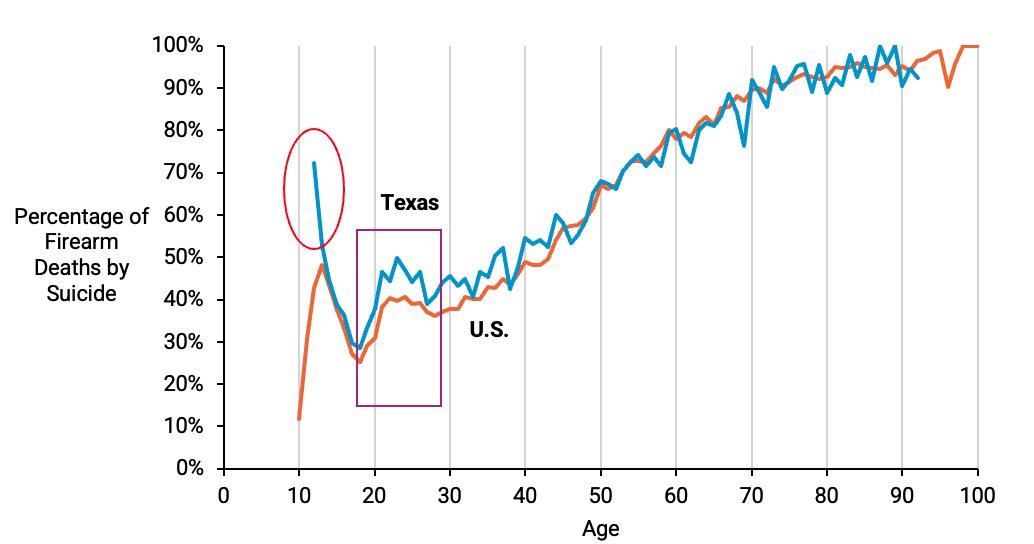
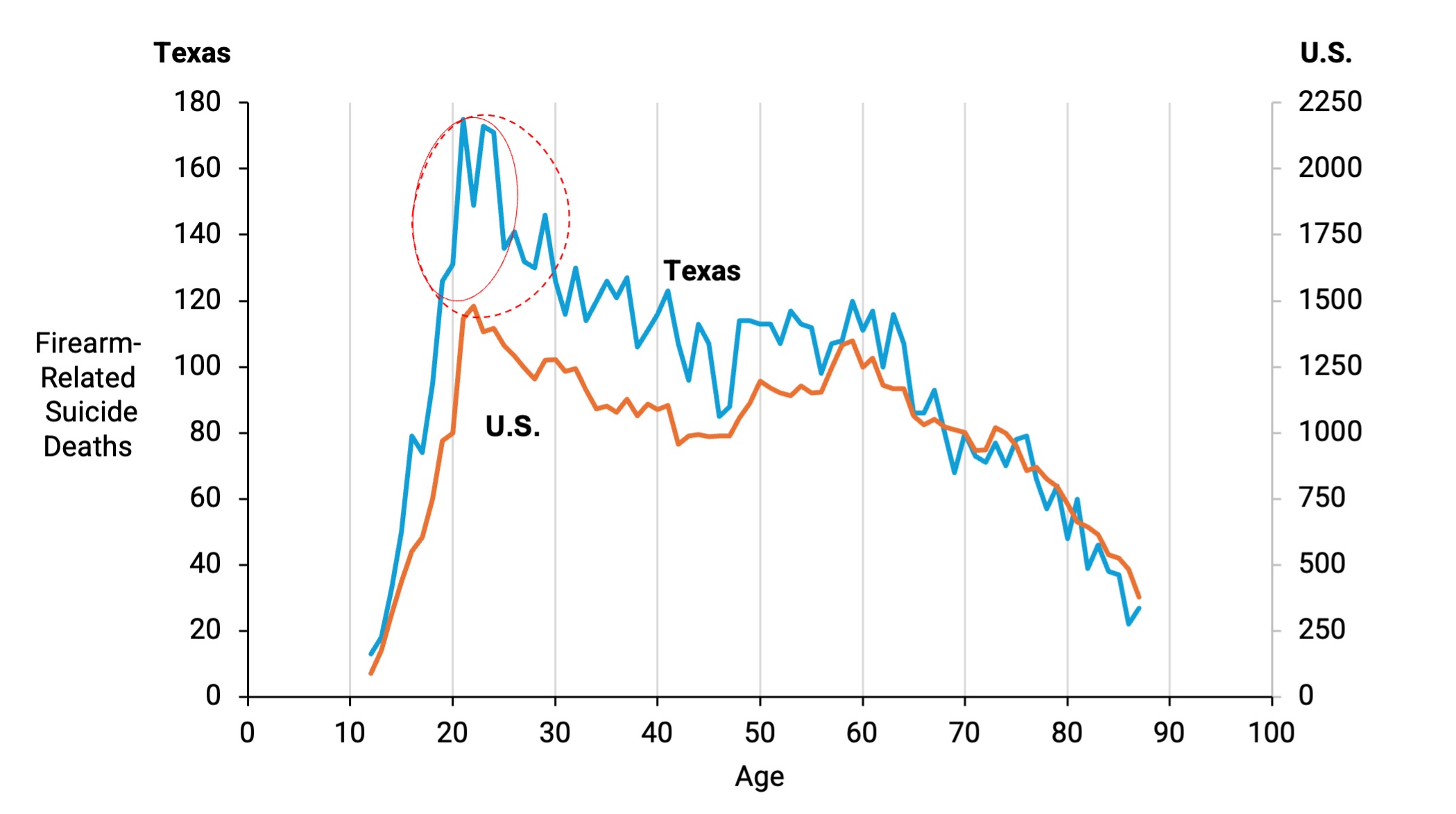
As a function of age, the greatest number of firearm-related suicides occurred in 20 to 24-year-olds, both nationally and in Texas (Figure 2). Texas, however, had a distinctly higher firearm-related suicide rate in young adults (Figure 2, blue curve), and especially in 18 to 24-year-olds (Figure 2, red oval), compared to the rest of the U.S. (Figure 2, orange curve). In Texas, 18 to 29-year-olds had the highest number of firearm-related suicides (Figure 2, dashed oval).
Figure 2 — Number of Firearm-Related Suicides in Texas and US, 2000–22
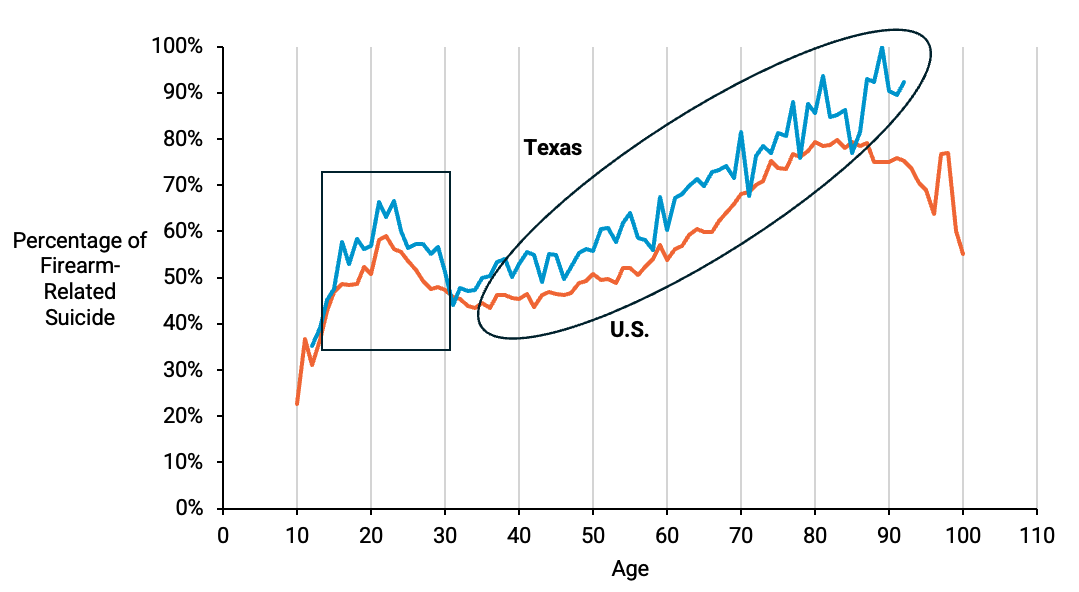
Texas also had a higher rate of firearm-related suicides in nearly all age groups above 15, with a peak difference in 12 to 29-year-olds, and relatively constant difference in those 40 years and older compared to rates across the U.S. (Figure 3, oval). Extrapolating from the trend above age 40, the percentage of suicides by firearm among 10 to 30-year-old Texans is approximately 40% higher than the trend.
To the extent that the percentage of firearm-related suicides as a proportion of all suicides serves as a proxy for firearm availability, there may be more firearms available to 15 to 30-year-olds than those to middle-aged adults.
The data of Figures 1 and 2 suggest that younger age groups, especially in Texas, have higher rates of firearm-related suicides than older age groups. This is likely due to easier access to firearms under state law.
Figure 3 — Percentage of Firearm-Related Suicides in Texas and US, 2000–22
In terms of firearm type, one long gun suicide death occurred for every five handgun suicide deaths among 18 to 20-year-old Texans during 2020–21, according to the CDC WONDER database. This suggests that most of the firearm-related suicides in this age group might have been prevented if a handgun were not available, and that restricting long gun access could have a significant impact in reducing deaths.
As the data demonstrates, firearm-related suicides pose a significant problem. Addressing this issue by raising the age requirement for firearm access could potentially save many lives, especially when combined with efforts to prevent homicides and mass shootings.
Temporal Trends of Firearm-Related Suicides in Texas and US
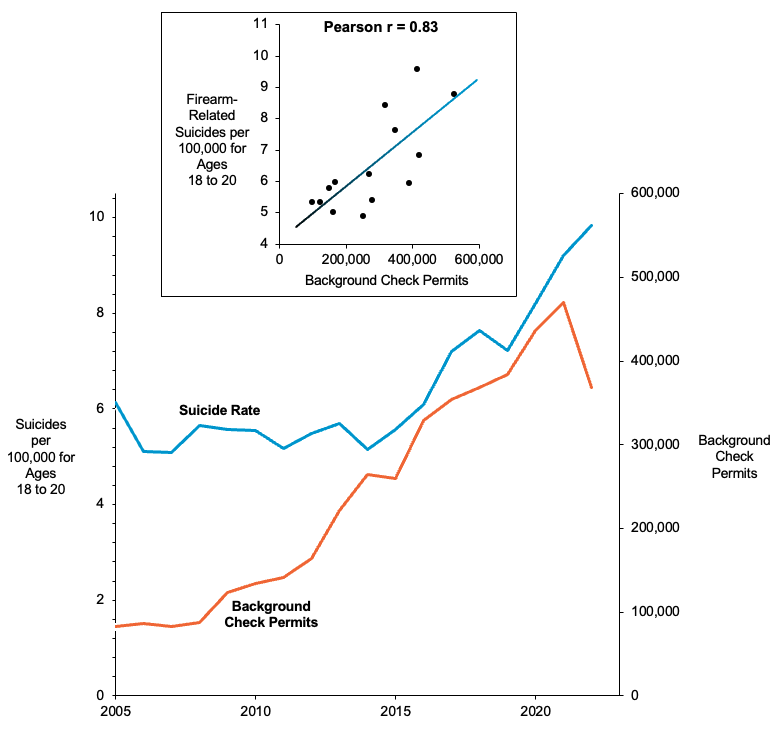
Current time trends in firearm-related suicide rates highlight the need for urgent intervention. For example, since 2015, firearm death rates among 18 to 20-year-olds in Texas have increased more significantly than in the rest of the U.S. (Figure 4). This rise is concordant with the trend of increased firearm purchases by Texans, according to NICS data (Figure 5).
In 2022, one in every 11 Americans aged 18 to 20 lived in Texas, but one in every seven Americans in this age group died of firearm-related suicide in Texas, according to data from the CDC WONDER database. This proportion is the highest across all U.S. states.
Figure 4 — Annual Firearm-Related Suicide Rate for Ages 18 to 20 in Texas and US, 2000–22
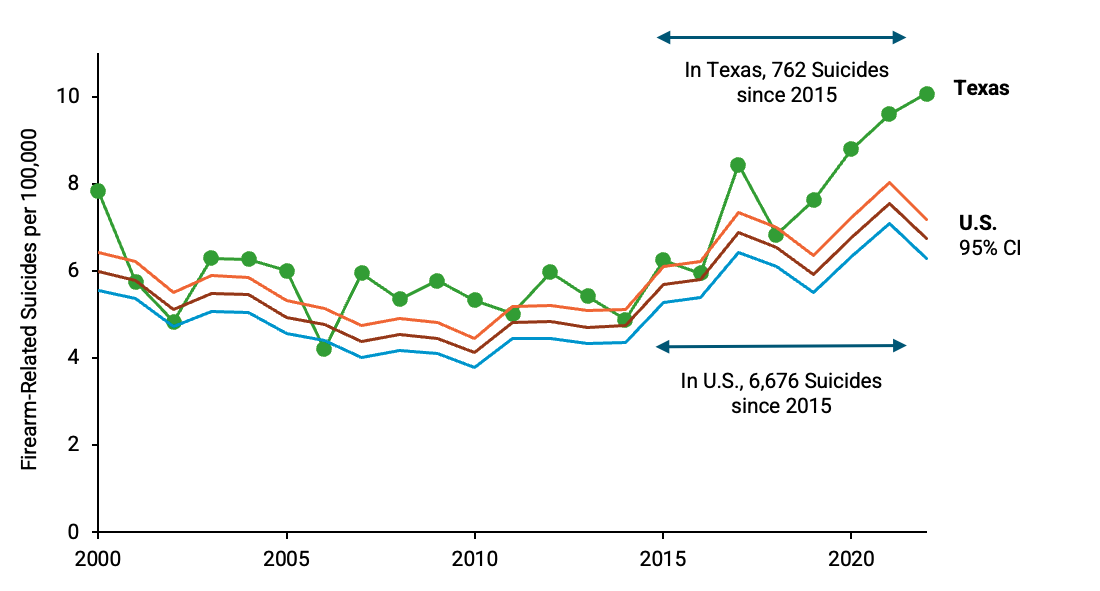
Note: Confidence interval is denoted at CI.
Figure 5 — Annual Firearm-Related Suicide Rate and Number of Background Check Permits for Ages 18 to 20 in Texas, 2000–23
Trends in States With 18 or 21 Minimum Age for Handgun Purchases
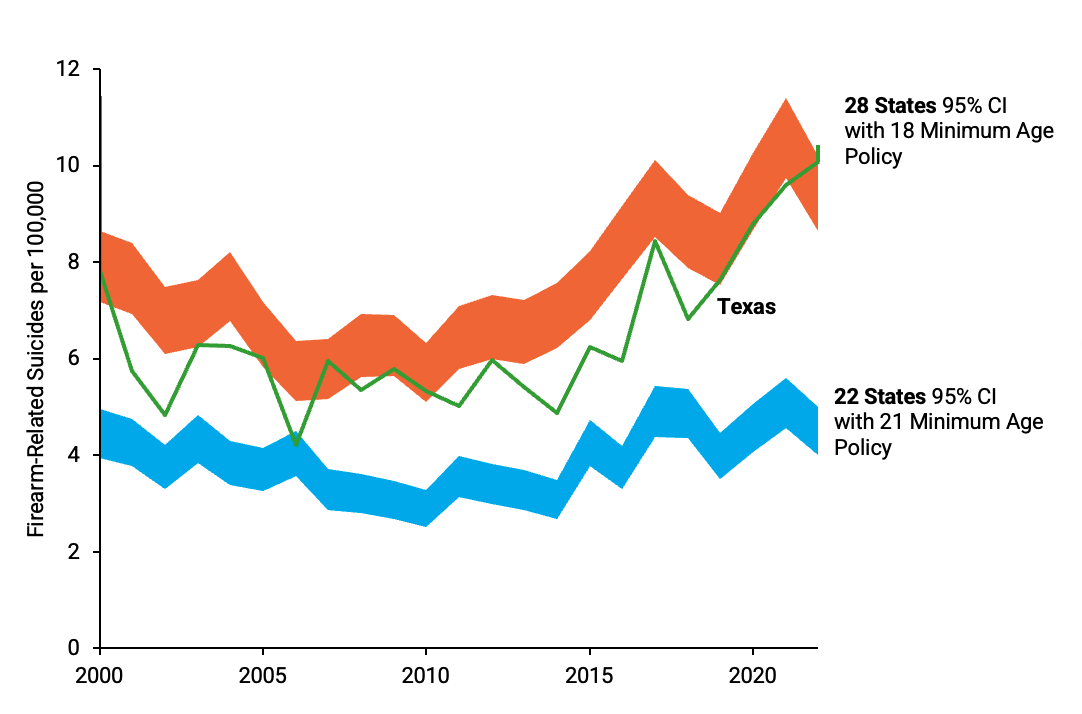
States with a minimum age requirement of 21 to purchase a handgun have experienced a significantly lower firearm-related suicide rate for 18 to 20-year-olds (Figure 6, blue data). Since 2015, they have also seen less of an increase in rates compared to those of other states (Figure 6, orange data). Additionally, Texas had a lower firearm-related suicide rate for 18 to 20-year-olds than states with a minimum age requirement of 18 (Figure 6, green curve).
However, since 2015, the rate in Texas has increased more rapidly than other states with a minimum age requirement of 18. As of 2022, Texas’ rate is one of the highest in the U.S.
Figure 6 — Annual Firearm-Related Suicide Rates Across States With an 18 or 21 Minimum Age Requirement to Purchase Handguns, 2000–22
States with a minimum age requirement of 21 for the purchase of all firearms, whether from an FFL dealer or an unlicensed source, have a lower firearm death rate for 18 to 20-year-olds compared to states that allow long gun purchases for individuals in this age group. Both sets of states also have a much lower rate than those with a minimum age requirement of 18 for all firearms (Figure 7).
Figure 7 — Firearm Death Rates for Ages 18 to 20 for States With Different Age and Firearm Type Requirements, 2019–22
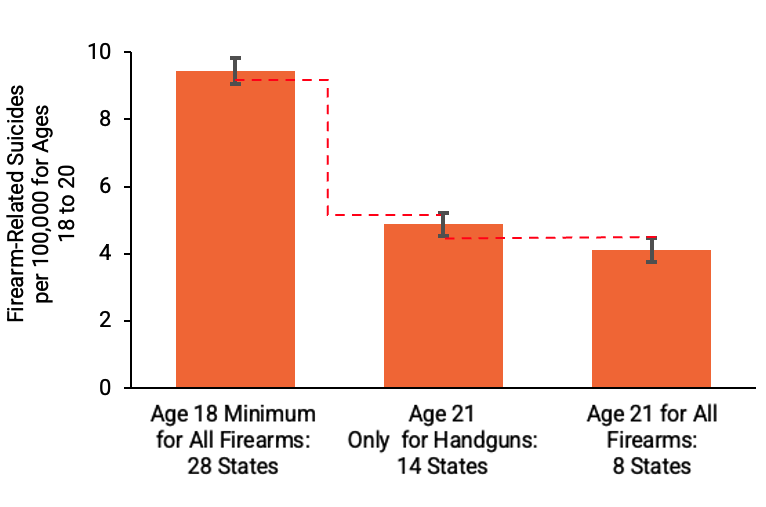
Note: The CI is 95%.
Male and Female Firearm-Related Suicide Rates for 18 to 20-Year-Olds
While males experience a much higher rate of firearm-related suicide in the U.S. overall, Texas females have seen a greater increase in the firearm-related suicide rate compared to the average rate across states with a minimum age requirement of 18 to purchase a handgun (Figure 8).
Figure 8 — Annual Firearm-Related Suicide Rates for Males and Females Ages 18 to 20 for States With Different Age Requirements to Purchase a Handgun, 2010–22
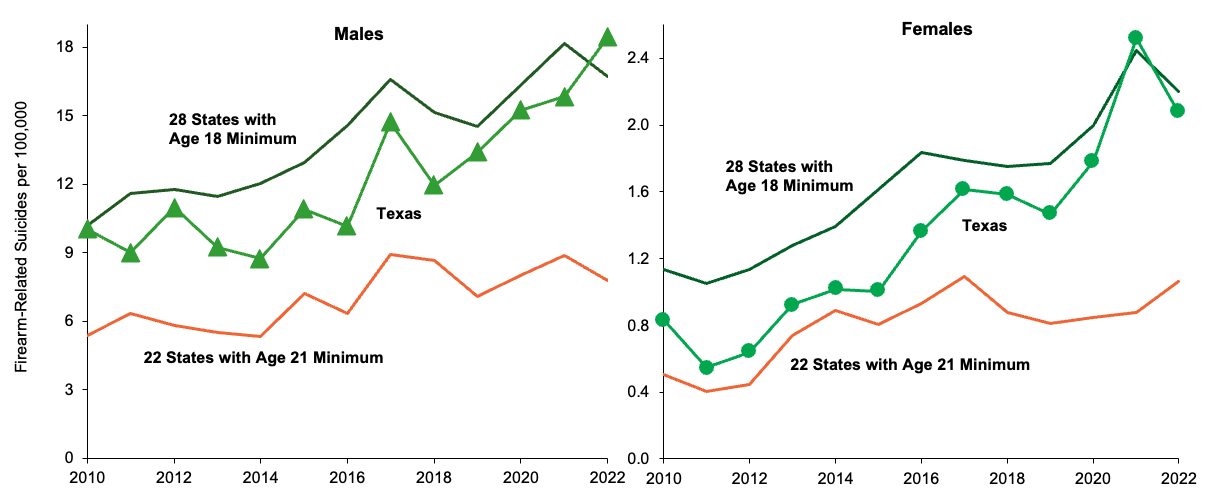
Note: Curves for female trends are two-year running averages.
When compared to the rest of the U.S., the firearm-related suicide rate for 18 to 20-year-old females in Texas quintupled from below the national average during 2012–22 to significantly higher than other states in just a decade (Figure 9).
Figure 9 — Annual Firearm-Related Suicide Rate for Females Ages 18 to 20 in Texas and US, 2012–22
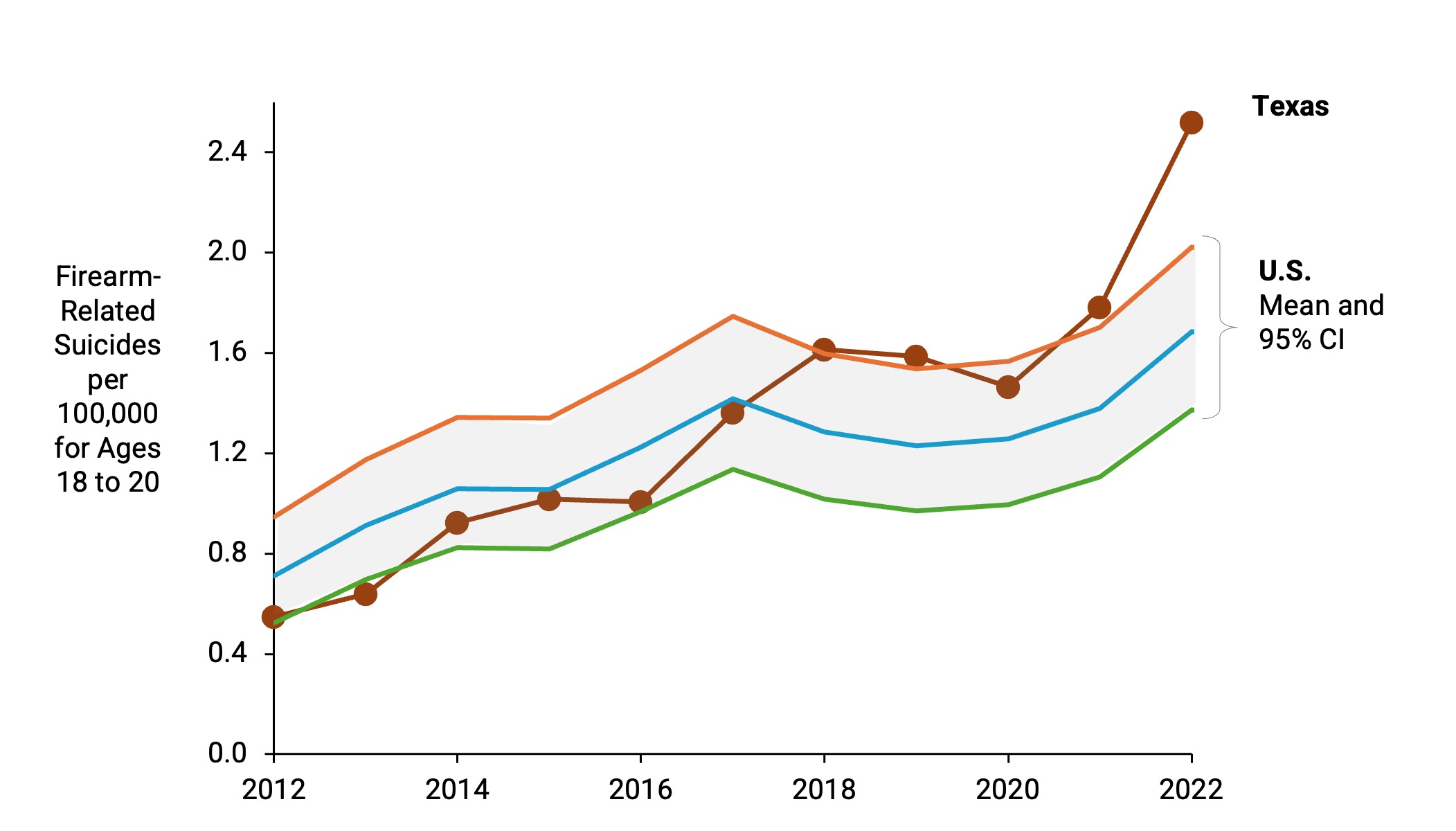
Note: Curves are two-year running averages.
Raising the minimum age requirement to 21 for the purchase of all firearms could firearm-related suicide rates among both young male and female adults in Texas.
Type of Firearm Deaths Across Texas
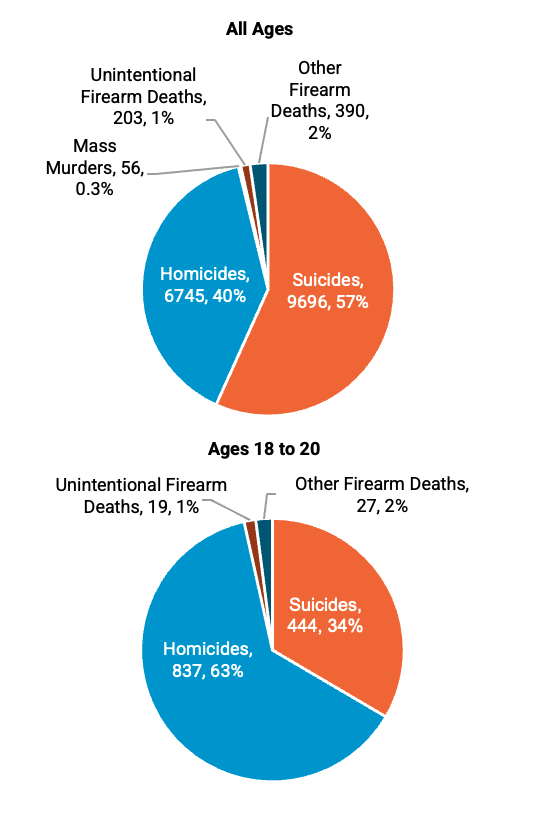
In Texas, from 2019 to 2022, there were 305 firearm deaths for every mass murder (Figure 10). During the same period, 18 to 20-year-olds experienced 24 times more firearm deaths than mass murders across all ages, as well as four times as many firearm-related suicides (Figure 10).
Figure 10 — Types of Firearm Deaths for All Ages and Ages 18 to 20 in Texas, 2019–22
A recent report from the Journal of Adolescent Health found that long guns are used in suicide at relatively higher rates in rural counties and among adolescent males across the U.S. Between 2005 and 2015, long guns accounted for 51% of adolescent male suicides in rural counties.
This data illustrates the link between access to firearms, especially for 18 to 20-year-olds, and the significant number of firearm-related deaths, particularly suicides, in Texas.
Thus, raising the minimum age to 21 for purchasing any firearm — whether handguns, long guns, or both — from an FFL or unlicensed dealer could help reduce firearm deaths, including firearm-related suicide deaths, across Texas.
Potential Benefit for Firearm Owners 21-Years-Old and Older
A firearm owner who is 21-years-old or older and purchased a firearm before turning 21 may be more likely to commit suicide between the ages of 21 and 24 or later. The peak in firearm-related suicides among 20 to 24-year-olds, as shown in Figures 1, 2, and 3, could be partially linked to an individual’s ability to purchase a firearm before reaching age 21.
If this is the case, raising the minimum age requirement from 18 to 21 could help reduce suicide risk among Texans older than 20.
Raising the Minimum Age Requirements To Reduce Suicide Rates
Suicide data supports the benefits of raising the minimum age requirement from 18 to 21 for handguns, as 22 states have legislated, and for all firearms including long guns, as 8 states have enacted. The evidence discussed above shows that states with a minimum age requirement of 21 to purchase either handguns or any firearm have lower firearm-related suicide rates across age groups, particularly among 18 to 20-year-olds, compared to the 28 states that do not have such legislation.
Thus, laws that increase the minimum age requirement to purchase firearms can help reduce overall firearm deaths, including homicide and mass murder rates, while also significantly preventing firearm-related suicides. Blocking firearm purchases before age 21 can also likely prevent suicides among individuals aged 21 and older.
Given the disproportionate rate of firearm-related suicides among 18 to 20-year-olds in Texas compared to the rest of the U.S., raising the minimum age from 18 to 21 could lower suicide rates and other firearm-related deaths in the state. Additionally, such a change could serve as an effective case study for other states with a minimum age requirement of 18 to follow.
Altogether, raising the minimum age to purchase any firearm from 18 to 21 is likely to support suicide prevention efforts and greatly improve overall firearm violence prevention in Texas and across the U.S.
Acknowledgements
The authors would like to thank the U.S. Centers for Disease Control and Prevention for providing state-level data on firearm and suicide deaths.
This publication was produced on behalf of Rice University’s Baker Institute for Public Policy. Wherever feasible, the material was reviewed by external experts prior to its release. Any errors are the responsibility of the author(s) alone.
This material may be quoted or reproduced without prior permission, provided appropriate credit is given to the author(s) and Rice University’s Baker Institute for Public Policy. The views expressed herein are those of the individual author(s) and do not necessarily represent the views of Rice University’s Baker Institute for Public Policy.


