


Author(s)

This brief is part of “Election 2024: Policy Playbook,” a series by Rice University and the Baker Institute that offers critical context, analysis, and recommendations to inform policymaking in the United States and Texas.
The Big Picture
- Oil is likely to remain the leading fuel source for the U.S. economy for the foreseeable future; price movements — for crude oil and gasoline at the pump — will remain important drivers of the economy.
- Policy should seek to ensure secure, affordable fuel is available even amid efforts to reduce long-term dependence and emissions.
- The ability of policy to impact supply, demand, and prices in the near term is very limited, though policy can significantly impact longer-term trends.
- The oil market in highly efficient in adapting to changing circumstances, and policy should recognize the benefits of such an efficient operation and take care when interfering with the marketplace’s function.
Summarizing the Issue
Oil Remains the Leading Fuel for the U.S. Economy
While there is significant scope for policy to impact oil’s long-term role in the U.S. energy mix, the ability of policy to materially impact production, consumption, and prices over the next four years is much more limited. This brief focuses on short-term policy levers for managing extreme oil price movements; it does not discuss policies that can drive longer-term change, including but not limited to electric vehicle (EV) incentives, permitting, emissions, and water-handling.
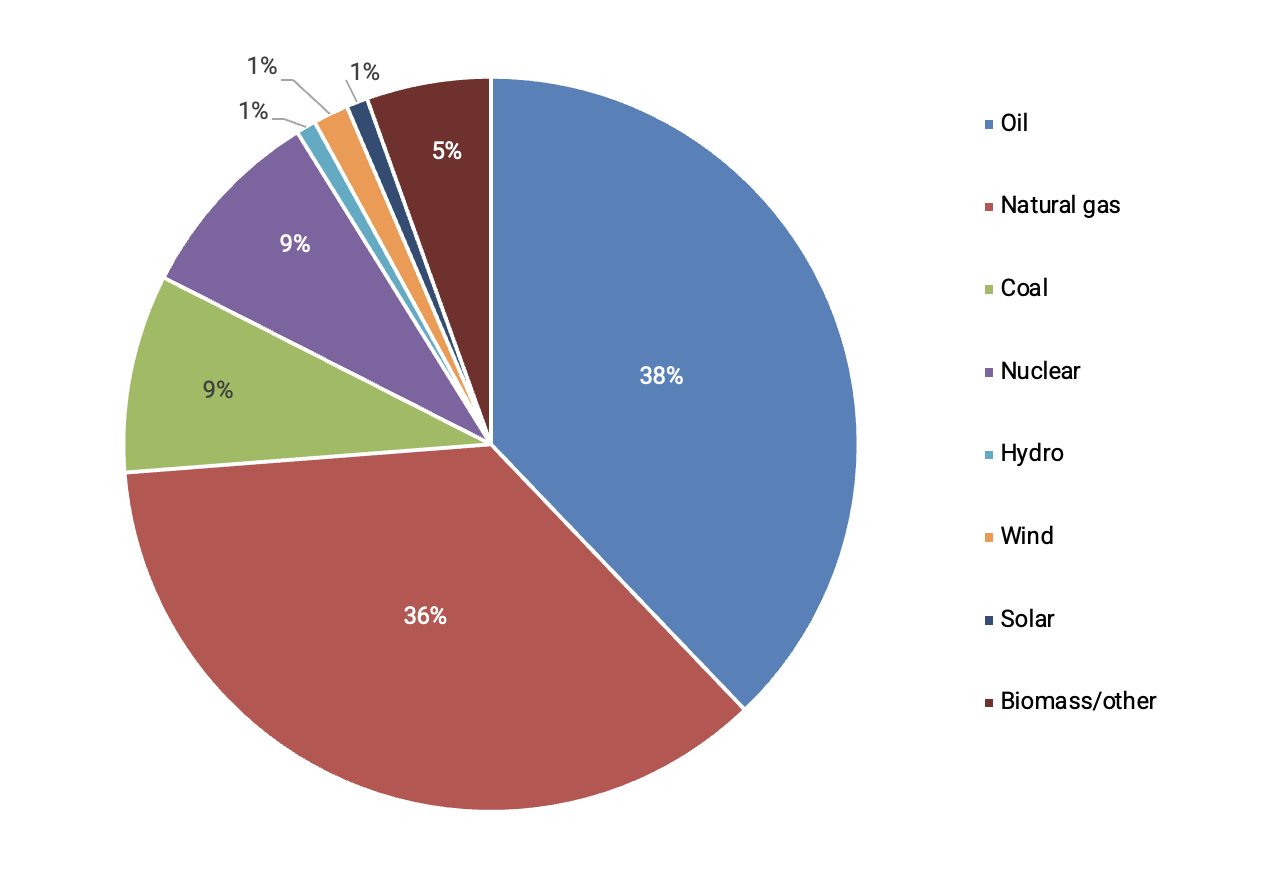
Oil is the largest energy source fueling the U.S. and global economy, accounting for 38% of U.S. energy consumption last year and 32% of global energy use. It is very likely to remain the leading energy source throughout the terms of the next presidency and Congress, no matter who is elected — and no matter what policies are pursued. In the U.S. Energy Information Administration’s Annual Energy Outlook 2023, “petroleum and other liquids” remains the largest U.S. fuel for 2028 in all its analytical cases.
Figure 1 – US Energy Consumption, 2023
Expert Analysis
A Global Market for Prices
While the U.S. is by far the world’s largest oil producer and consumer, it is not and cannot aspire to be independent of global developments. Prices for crude oil and refined products are set in a global marketplace. While the U.S. has become a net oil exporter in recent years, it remains a large importer of crude oil and refined products. Total imports and exports last year were equivalent to over 90% of domestic consumption and production. As a result, the U.S. remains intimately connected to global markets and vulnerable to developments abroad.
Private Companies Drive Domestic Investment
Additionally, investment decisions — at least here in the U.S. — are made by private companies. Moreover, oil wells and other elements of the oil infrastructure such as refineries and pipelines have long economic lives, so decisions made today will continue to impact supply for decades to come. This is also true of oil-consuming equipment, most notably long-lived motor vehicles — so demand is also likely to be slow in changing.
A Limited — But Important — Government Role
The ongoing importance of oil to our national economic and strategic interests means that U.S. policy will need to maintain its focus on affordable, reliable, and secure fuel even as we seek to change oil’s dominant role in our energy system.
The most immediate short-term federal policy lever for influencing oil prices is the Strategic Petroleum Reserve (SPR). As of Sept. 6, 2024, the SPR held 380 million barrels of crude oil. With a maximum release capacity of 4.4 million barrels per day (Mb/d), it represents a formidable tool for managing oil supply disruptions — especially if used in concert with allies in the International Energy Agency, whose members currently hold 1.2 billion barrels of strategic stocks. The SPR can also be used to support prices by purchasing crude oil for storage, although purchases generally are subject to congressional funding authorizations.
With more than 5 Mb/d of spare production capacity globally — largely held by Saudi Arabia, the United Arab Emirates, and Iraq — another short-term policy option for addressing oil price volatility is foreign policy conduct, but oil diplomacy is complicated by the revenue needs of the countries holding spare capacity.
Policy Actions
Attempting to manage oil price volatility is a slippery game. Price movements are how the market signals supply, demand, trade, and inventories to adjust to changing circumstances. The global market does this daily and with great efficiency, balancing a market of some 100 Mb/d of crude oil and refined products. No central plan could react with the same speed or cost. Policy measures to control prices or limit trade would also have massive implications for the smooth delivery of fuel.
At the same time, sharp sudden price changes not only impact consumer spending but also confidence. The challenge for policymakers is to thread the needle, allowing the marketplace to work while managing the adverse economic, political, and geopolitical consequences of changes that some may consider as too extensive — judgments which will always be in the eye of the beholder.
Thus, when approaching energy-related policy, or policy in other arenas that can impact energy, policymakers should keep the following in mind:
- Recognize that policy impacts on oil supply, demand, and prices in the near term are very limited, though policy can significantly impact longer-term trends.
- Allow the oil marketplace to function and adapt when possible and take care when interfering with it.
- Consider oil’s current dominance when drafting new energy policies and supporting energy transition efforts toward reducing U.S. dependency on it, in order to ensure a smooth transition while maintaining access to secure, affordable fuel.
The Bottom Line
New energy policies implemented by the new administration should recognize the central role of oil in our energy mix and the proven efficiency of the global oil market in adapting to change, and ensure that secure, affordable oil is available even amid efforts to reduce long-term dependence on it.
This material may be quoted or reproduced without prior permission, provided appropriate credit is given to the author and Rice University’s Baker Institute for Public Policy. The views expressed herein are those of the individual author(s), and do not necessarily represent the views of Rice University’s Baker Institute for Public Policy.


