


This brief is part of “Election 2024: Policy Playbook,” a series by Rice University and the Baker Institute that offers critical context, analysis, and recommendations to inform policymaking in the United States and Texas.
The Big Picture
- Efforts to expand public prekindergarten (pre-K) in Texas were disrupted by the COVID-19 pandemic, and pre-K enrollment in the Houston region is only now recovering to pre-pandemic levels.
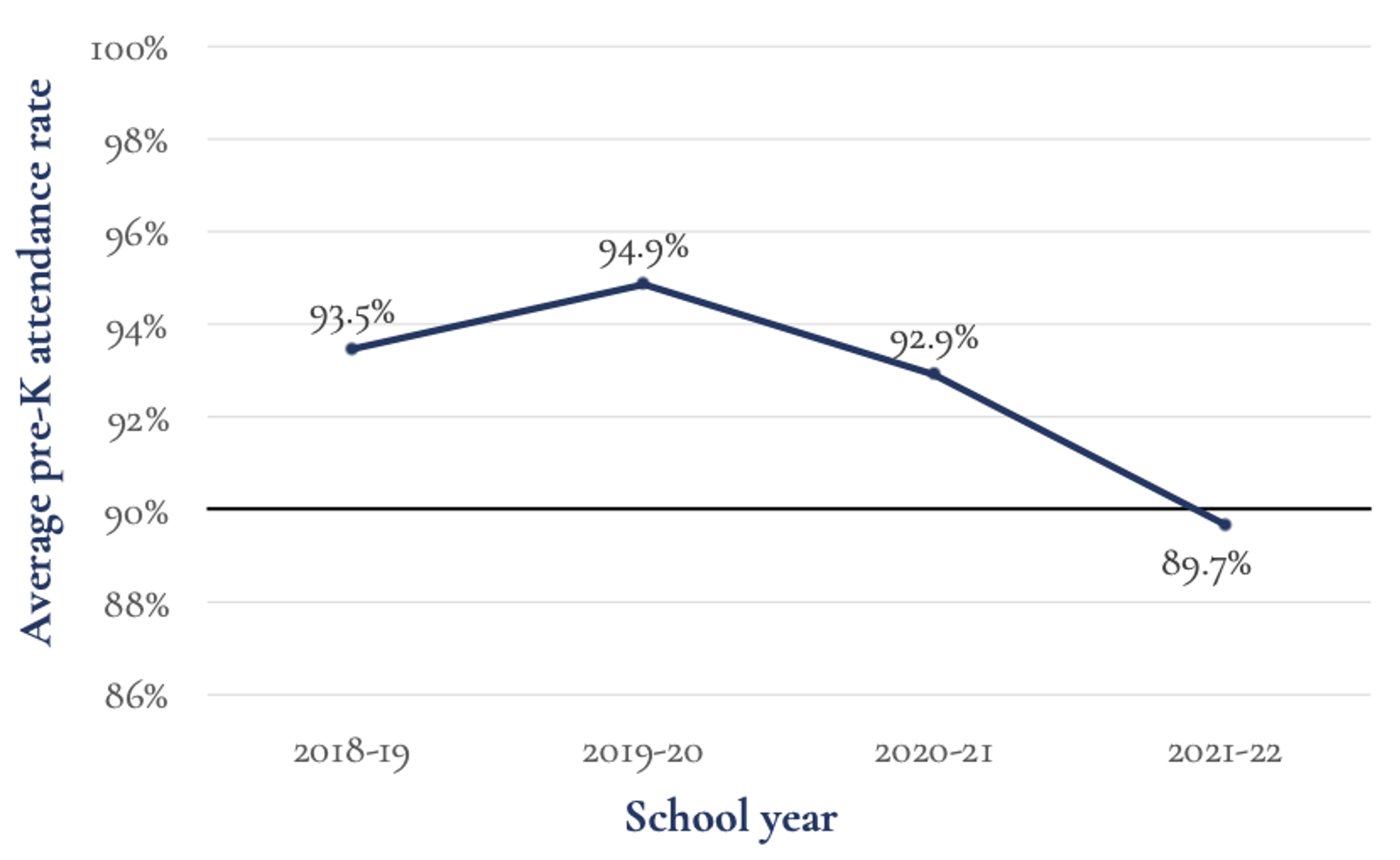
- Daily attendance also declined during the pandemic and has not yet rebounded.
- Public pre-K participation in the Houston region is linked to a greater likelihood of children being ready for kindergarten and slightly higher English proficiency scores for emergent bilingual students.
- Texas should increase both pre-K funding and its efforts to boost enrollment and attendance so that eligible students can access high-quality public pre-K programs.
Summarizing the Issue
Decades of research have found that high-quality preschool programs benefit children’s academic, social, and emotional development, with these benefits lasting through elementary school into adulthood. This is particularly true for underserved students, such as those who are economically disadvantaged, a racial minority, or English learners. These findings are exceptionally relevant in Texas, where free, public pre-K is targeted toward underserved students.
Expert Analysis
According to the National Institute for Early Education Research (NIEER), Texas ranks 10th in the nation for providing access to pre-K for 4-year-olds, but 34th in state spending to implement pre-K. Providing high-quality pre-K is estimated to require $12,500 per student, more than three times the current expenditure.
In the past five years, pre-K in Texas public school districts have seen several changes.
- In 2019, the state passed Texas House Bill 3 (HB 3), a school finance bill that required districts to provide full-day pre-K to all eligible 4-year-olds. However, this expansion coincided with the onset of the COVID-19 pandemic, which created unprecedented conditions for young students.
- Between 2019–20 and 2020–21, public pre-K enrollment declined by 22% in the Houston region, a decrease of over 11,000 students.
- Since then, enrollment has gradually increased and is now nearing pre-pandemic levels.
The Kinder Institute for Urban Research’s Houston Education Research Consortium conducted a study of attendance patterns and early elementary outcomes of public school district pre-K students in the Houston region — this area comprises 19% of Texas’ pre-K students. Their findings are outlined below and illustrated in Figures 1, 2, and 3.
Daily Attendance
Although pre-K enrollment has mostly returned to pre-pandemic levels, pre-K attendance has not (Figure 1). Attendance was at its highest (94.9%) in the 2019–20 school year. After the onset of the pandemic, the average rate fell and continued to decline. In 2021–22, the average pre-K attendance rate was 89.7%, directly below the 90% cutoff for chronic absenteeism. Previous research has found that pre-K students who were chronically absent were less likely to be ready for kindergarten and more likely to be chronically absent in subsequent grades.
Figure 1 — Pre-K Attendance Rates in the Houston Region
Kindergarten Readiness
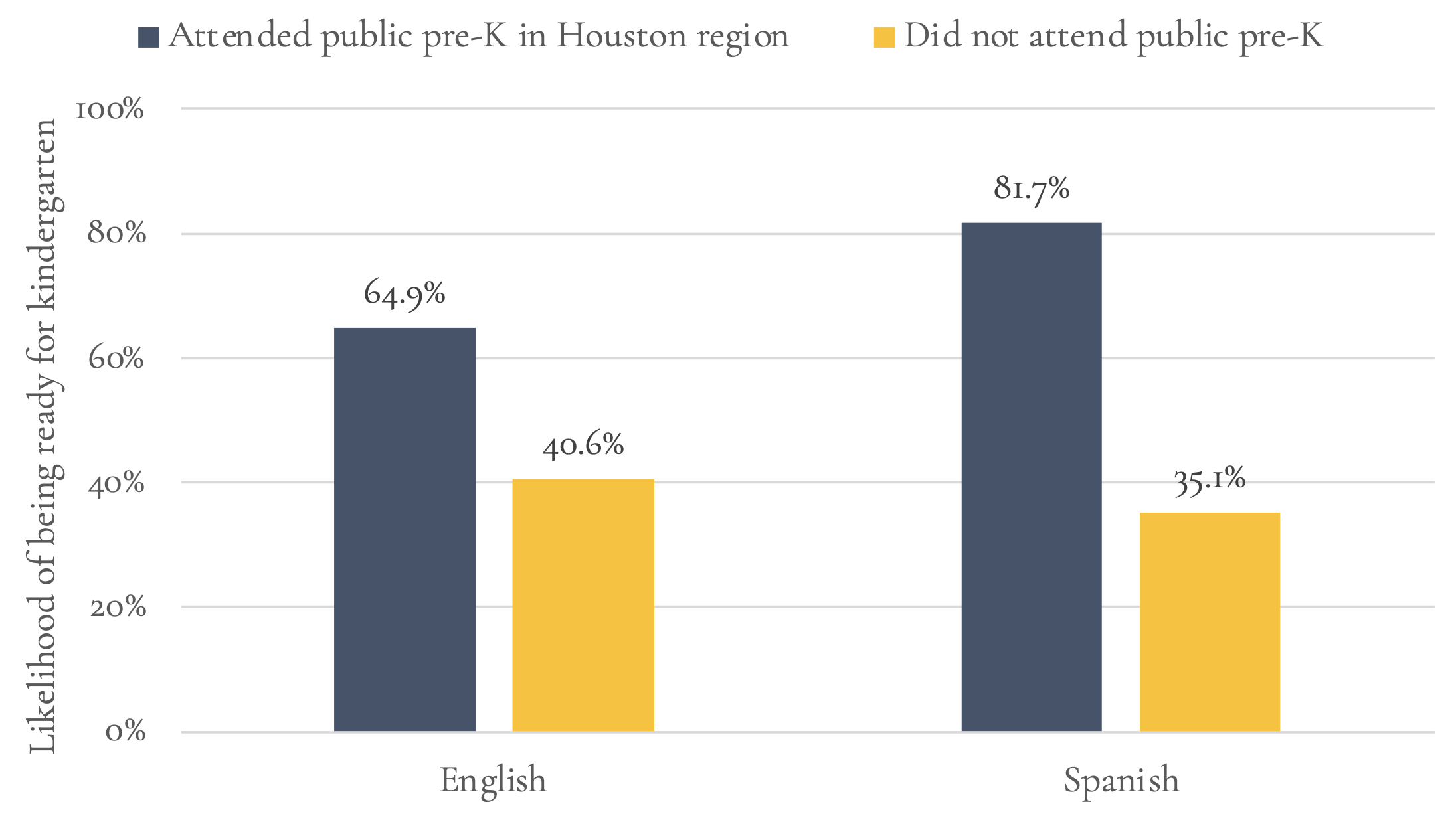
Students who attended public pre-K in the Houston region were more likely to be ready for kindergarten than students who did not but were likely eligible (Figure 2). Among students who were assessed in English, those who attended public pre-K in the Houston region were over 24 percentage points more likely to be ready for kindergarten compared to students who did not. Of those who were assessed in Spanish, those who attended public pre-K were almost 47 percentage points more likely to be ready for kindergarten.
Figure 2 — Pre-K Participation in the Houston
English Proficiency
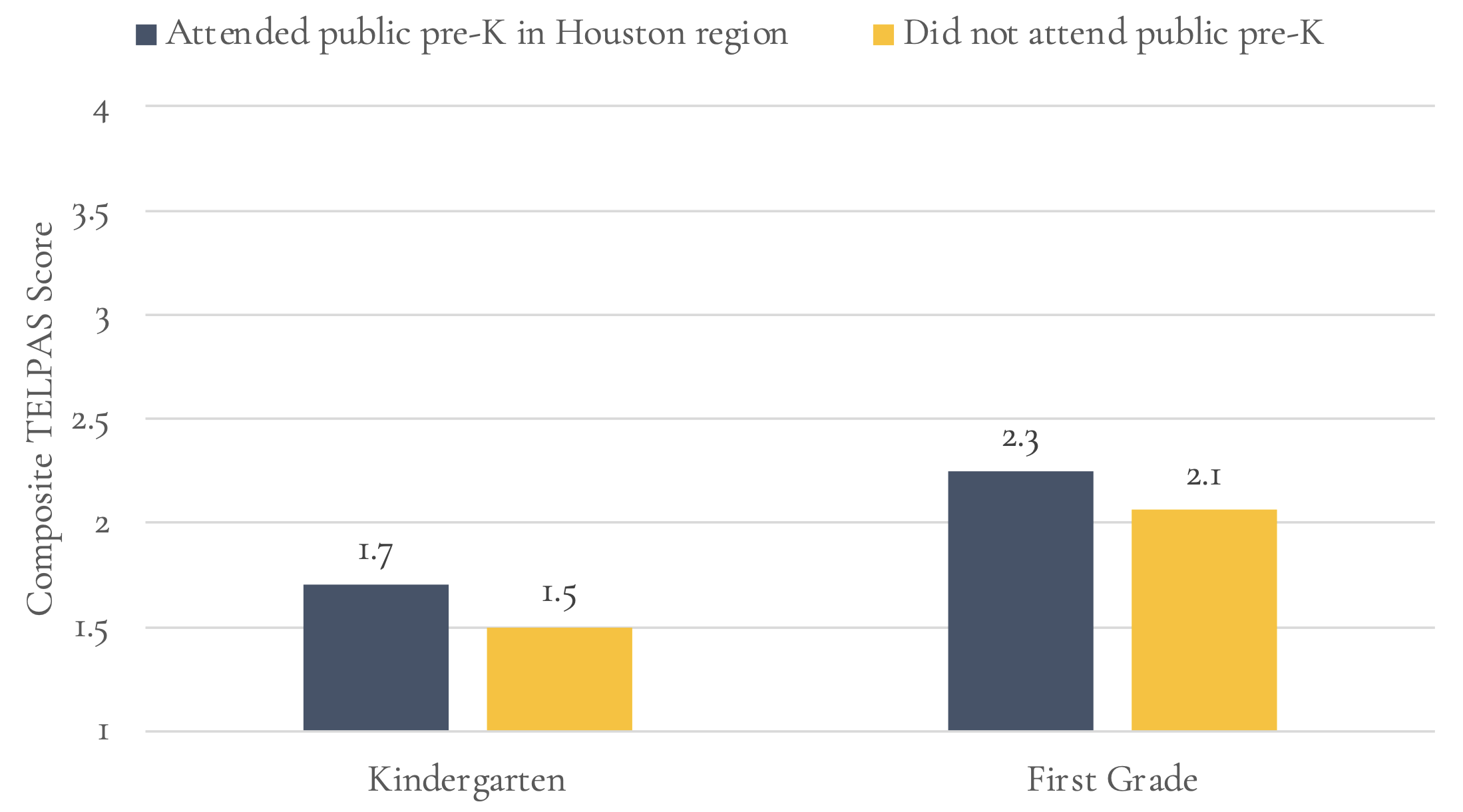
Emergent bilingual students in Texas — who are learning English as a second language even as they are still developing their primary language skills — are assessed yearly to measure their English proficiency and are provided with a composite score ranging from 1 to 4, with 4 being the highest level of proficiency.
Among emergent bilingual students, those who attended public pre-K in the Houston region were likely to score 0.2 points higher for English proficiency in kindergarten and first grade compared to emergent bilingual students who did not attend public pre-K (Figure 3).
Figure 3 — Pre-K Participation in the Houston Region and English Proficiency Scores Among Emergent Bilingual Students
Policy Actions
State action is needed to ensure that pre-K programs in Texas are adequately funded and families are aware of the early learning opportunities available for their children. Texas has the potential to improve pre-K programs and increase enrollment to help close existing kindergarten learning gaps.
It is recommended that state legislators:
- Increase funding for public pre-K programs. Public pre-K is underfunded in Texas, and providing additional funding for pre-K programs would allow districts to invest in high-quality learning experiences.
- Improve and expand efforts to increase pre-K enrollment and attendance. A significant number of students who qualify for free, public pre-K do not attend. The state should increase efforts to raise awareness of the availability of pre-K and the importance of daily attendance.
The Bottom Line
Despite not being adequately funded, public pre-K is associated with early benefits in elementary school, which last into adulthood. Texas should invest in its public school districts to ensure they can provide high-quality early learning opportunities for pre-K students while also addressing the lower post-pandemic attendance rates.
This material may be quoted or reproduced without prior permission, provided appropriate credit is given to the author and Rice University’s Baker Institute for Public Policy. The views expressed herein are those of the individual author(s), and do not necessarily represent the views of Rice University’s Baker Institute for Public Policy.


