


Over the course of the last year, a working group organized through the Baker Institute Center for the U.S. and Mexico has collaborated to write several papers analyzing the alliance structure of Mexican organized crime. In this commentary, we summarize two papers published by the Baker Institute highlighting key findings and takeaways.
Mexico’s 2021 Dark Network Alliance Structure
In the first research paper, Mexico’s 2021 Dark Network Alliance Structure: An Exploratory Social Network Analysis of Lantia Consultores' Illicit Network Alliance and Subgroup Data, we examined the overall structure of cartel alliances in Mexico using data from Lantia Consultores, a respected Mexican security consulting firm. With access to this impressive data, we were able to demonstrate the overall structure of cartel alliances in Mexico in two ways.
First, we empirically validated a bipolar structure in Mexico (Figure 1) by demonstrating the high centrality of the two primary cartel actors, the two poles of power being the Sinaloa Cartel and the Cártel de Jalisco Nueva Generación (CJNG).
Figure 1 — Sinaloa Cartel and Cártel de Jalisco Nueva Generación (CJNG) Combined Ego Networks
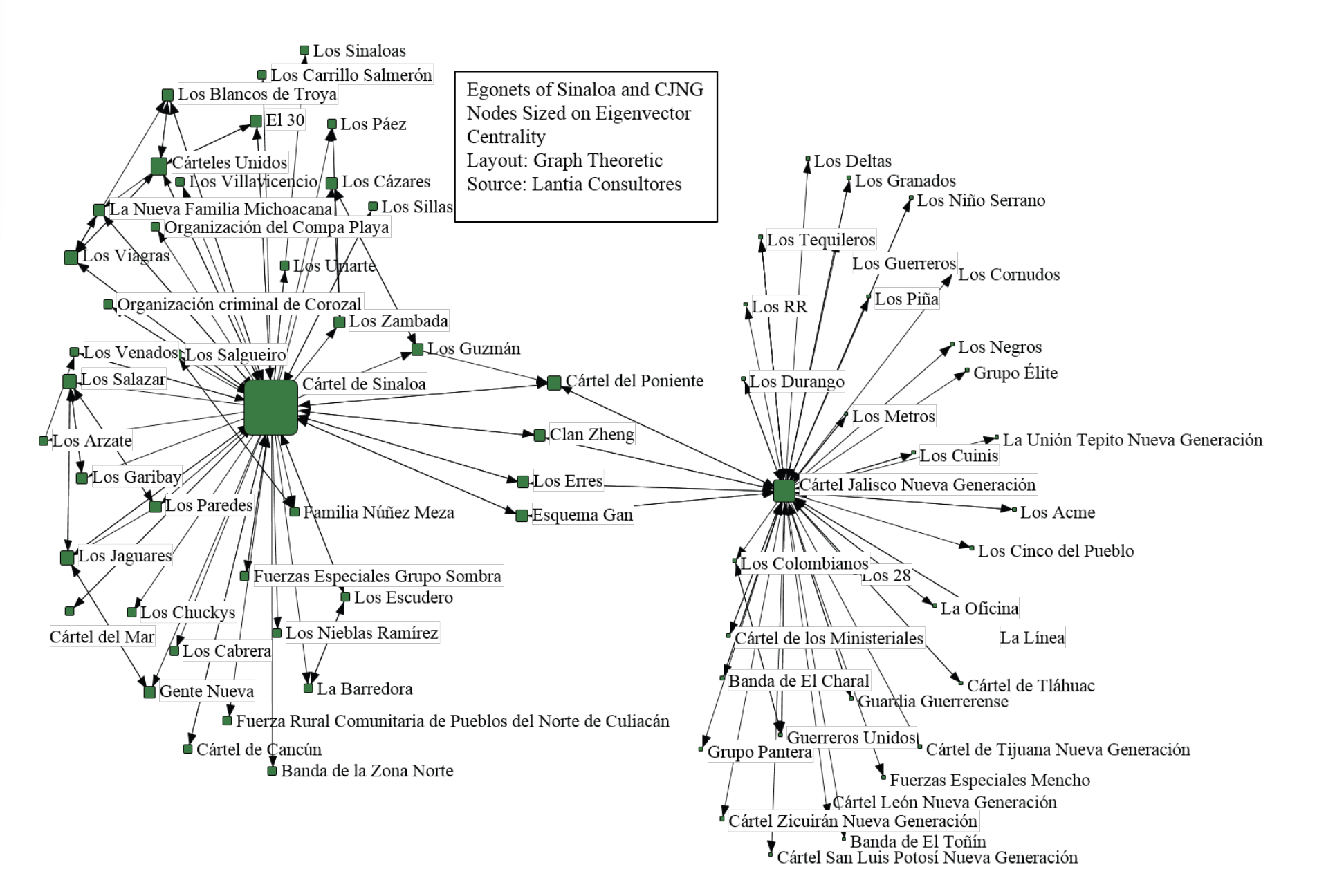
Source Authors’ elaboration based on data from Lantia Consultores.
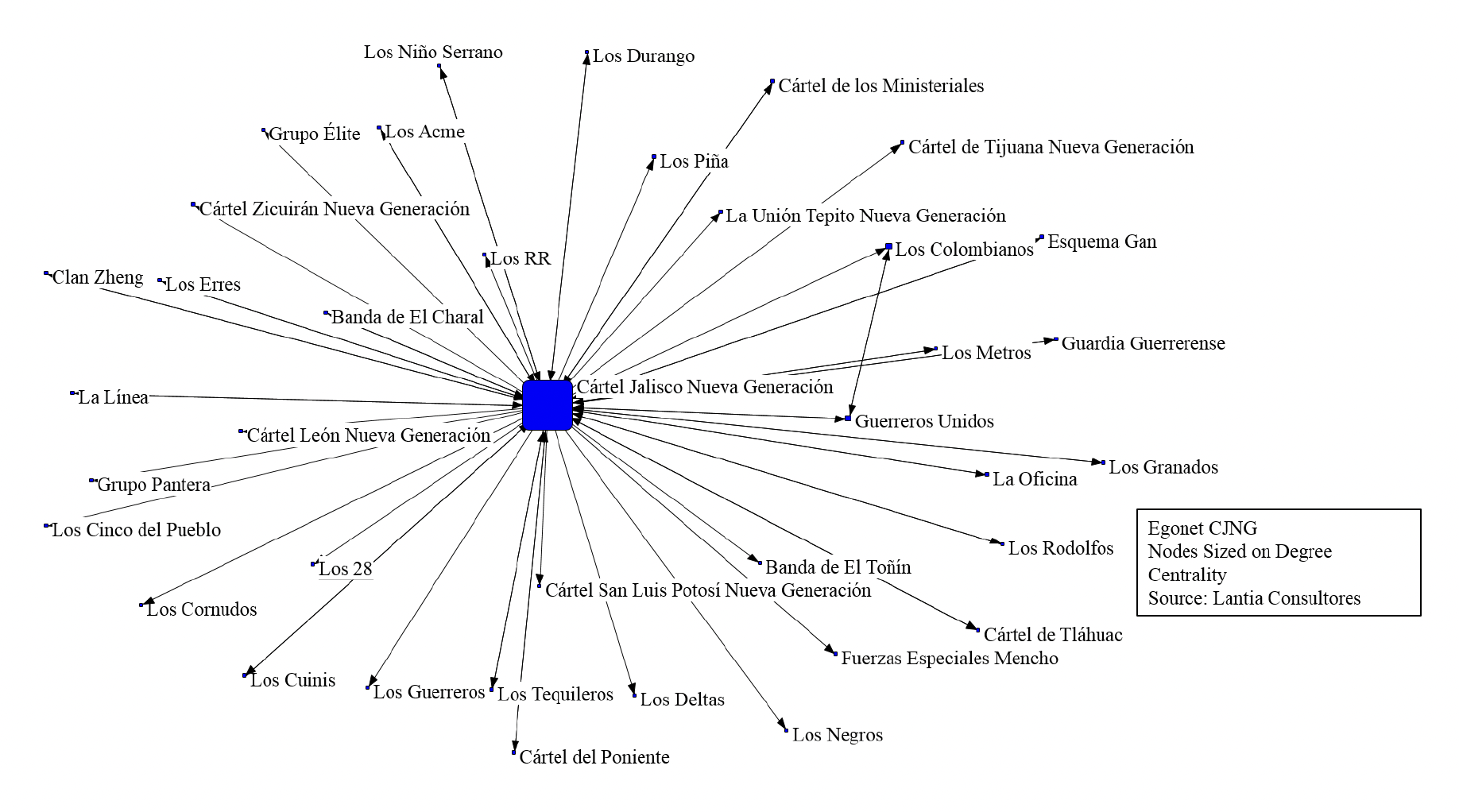
Second, we found that these two cartels organized their alliances very differently — as shown in Figures 2 and 3.
- The Sinaloa Cartel was more traditional and inserted itself into existing alliance networks.
- The CJNG, on the other hand, was more territorial — organized more hierarchically with a less dense network structure.
Alternative hypotheses to explain these differing structures were considered. For example, was the Sinaloa Cartel really more traditional in terms of embedding themselves in existing networks? Or were they desperately balancing against an encroaching CJNG? We found that a combination of factors — rather than one factor alone — explained these key differences.
Figure 2 — Sinaloa Cartel Ego Network
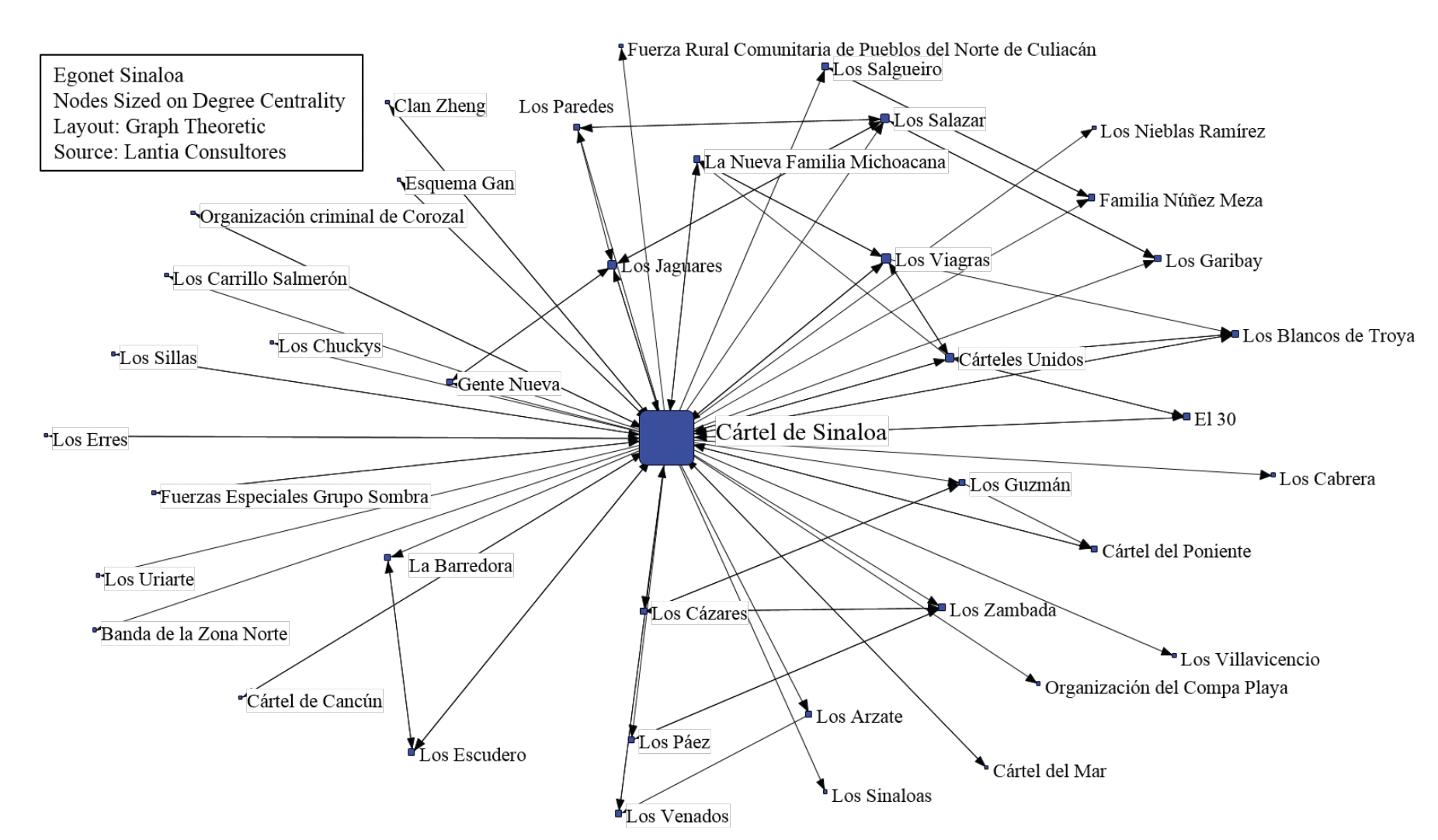
Figure 3 — Cartel Jalisco Nueva Generación (CJNG) Ego Network
The Use of Similarity-Based Algorithms
In the second research paper, The Use of Similarity-Based Algorithms to Predict Links in Mexican Criminal Networks, we used social network analysis (SNA) and node similarity-based algorithms to predict links in Mexico’s network of criminal organizations. When studying criminal networks and seeking ways to combat them guidance on which cartels may form new alliances in the future is invaluable, which is why predictive algorithms can be useful.
Figure 4 — Mexico’s Organized Crime Network (2021)
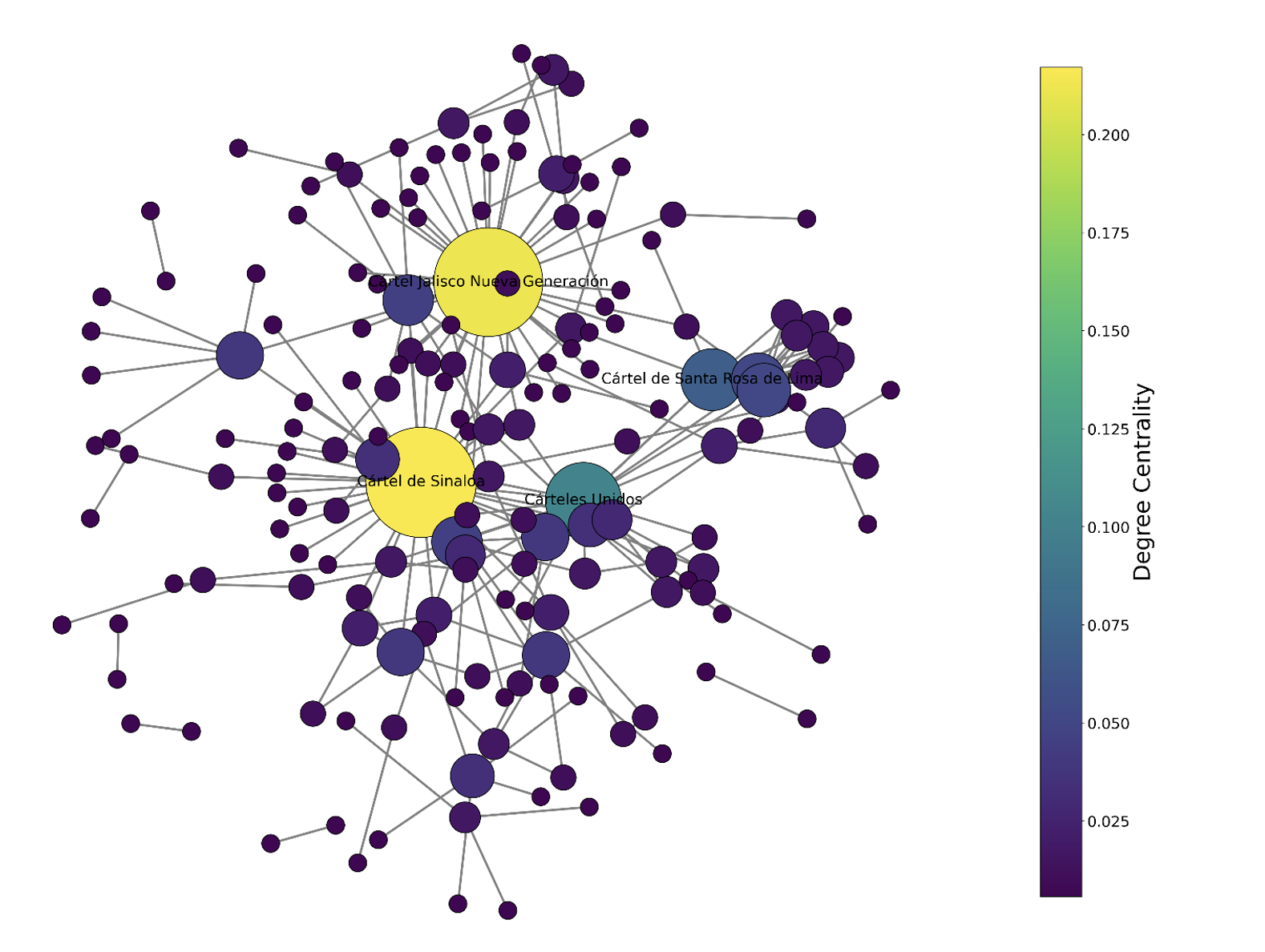
Source Contreras Velasco et al., 2023. Elaboration based on Lantia Consultores 2021 data.
Figure 4 above visualizes the cartel alliance network and sizes. The nodes of degree centrality (shown as colored circles) show that the cartels with the most alliances are the largest. This was the baseline network we used to predict future alliances using algorithms.
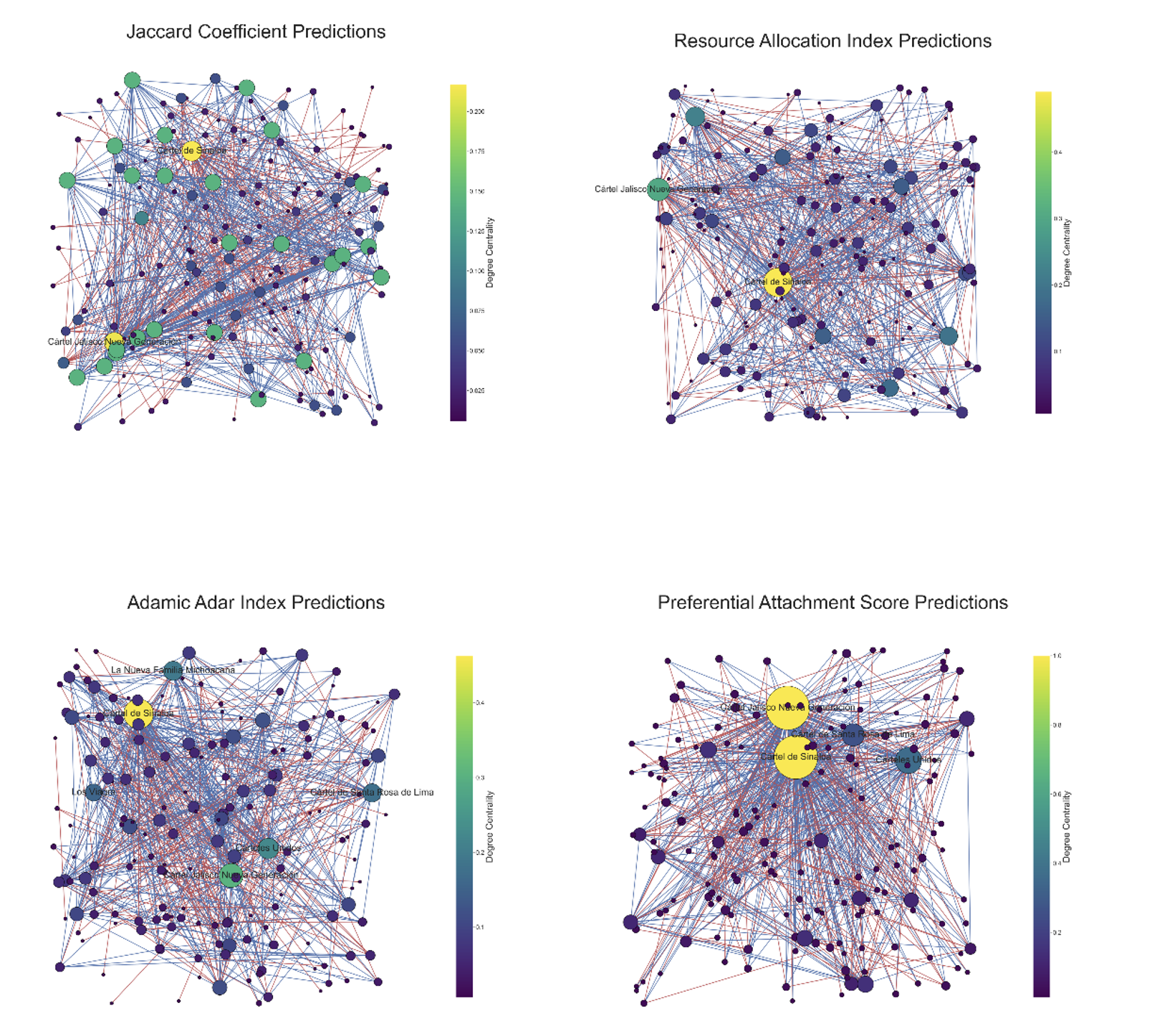
The team, led by primary author Oscar Contreras Velasco, tested available data using the following four predictive algorithms — often referred to as indexes:
- Adamic-Adar.
- Jaccard coefficient.
- Preferential attachment.
- Resource allocation.
We focused on these four algorithms because of their capacity to capture different forms of social capital, such as trust, access to information, and expectations. These particular forms are fundamental to establishing alliances between criminal organizations, and thus can be favorable predictors of new relationships (see Figure 5).
What we discovered was fascinating: the predicted relationships likely already existed. We were able to surmise this qualitatively based on the fact that many of the predicted relationships were groups already fighting on the same side, against the same enemies, and in the same cities. Thus, it was highly unlikely that these groups were not already working together. This led us to a key insight: predictive algorithms can help us not only identify future potential alliances, but also reveal missing data.
Dark networks are inherently difficult to study because they seek to conceal all aspects of their activities from legal authorities, whether in Mexico or the United States. However, the ability to use predictive algorithms to reveal missing data can help us better understand covert networks and find new ways to target them.
Figure 5 — Predicted Connections Using Four Different Algorithms
We hope this summary inspires you to take a closer look at this research and other open access resources here at the Baker Institute Center for the U.S. and Mexico. See also our peer-reviewed article on the same subject in “A Social Network Analysis of Mexico’s Dark Network Alliance Structure” in the Journal of Strategic Security.
Acknowledgments
The authors would like to thank Eduardo Guerrero Gutiérrez and Roberto Valladares of Lantia Consultores for data access and Tony Payan and Lisa Guáqueta of Rice University’s Baker Institute for Public Policy for research support.
This material may be quoted or reproduced without prior permission, provided appropriate credit is given to the author and Rice University’s Baker Institute for Public Policy. The views expressed herein are those of the individual author(s), and do not necessarily represent the views of Rice University’s Baker Institute for Public Policy.


