


Introduction
The 29th Conference of the Parties (COP29) to the United Nations Framework Convention on Climate Change (UNFCCC), held in November 2024 in Azerbaijan, produced a mixed outcome — two steps forward, one step back. While COP29 delegates agreed on a new finance goal to help countries protect their people and economies against climate disasters, other key issues for climate-affected communities were stalled. The outcome document was characterized by some as an “optical illusion,” as it fell far short of the estimated climate finance needs for developing countries.
The term “human mobility” encompasses three key aspects agreed by UNFCCC Parties: climate induced displacement, migration, and planned relocations. This brief offers an insider’s view of how these issues are represented in UN climate talks. While there has been gradual progress in integrating human mobility into core climate discussions, significant gaps remain in addressing the connections between climate change and human mobility within climate governance frameworks and financing mechanisms.
After providing an overview of the history of human mobility in UNFCCC discussions, the brief examines the latest round of climate negotiations, including the agreement on a new global climate financing target, backsliding since the 2015 Paris Agreement, unfulfilled promises on loss and damage, and steps toward enhancing climate justice, such as recognizing intergenerational impacts of climate change and the role of youth at the negotiating table.
Why Human Mobility Matters in Climate Negotiations
The intersection of climate change and human mobility continues to gain traction in international climate negotiations. While not the focal point of COP29, discussions advanced the recognition that climate change is already influencing patterns of human movement, necessitating proactive policy responses. Although progress may seem incremental, it is significant, especially considering that climate-related mobility was first mentioned within the UNFCCC at COP16, held in 2010, in Cancun, Mexico. By UN standards, this represents rapid progress.
Human mobility remains peripheral to the official negotiations, but a growing ecosystem around this issue — including related topics such as justice, peace, rural development, and reducing inequality — has emerged at COP meetings. The need to integrate these issues into the climate agenda is fundamentally a question of climate justice, as climate change disproportionately affects populations in the Global South, marginalized communities, and people living in vulnerable geographic regions. All of these groups have benefited the least from the fossil fuel economy and have limited capacity to adapt.
High-emitting countries bear significant responsibility for addressing climate impacts, in line with the principles of historical responsibility and common but differentiated responsibilities that guide the UNFCCC. Additionally, the impacts of climate change may be experienced differently, depending on intersectional factors such as poverty, age, gender, disability, and immigration or refugee status. These vulnerabilities not only exacerbate exposure to climate-related hazards but also shape migration decisions, creating barriers to mobility for some individuals and heightening displacement risks for others.
Migration is recognized by scholars as a powerful adaptation strategy for some households. For others, however, the increasing severity of climate impacts over time contributes to higher rates of migration and displacement, as extreme events and deepening poverty limit available coping responses. While the United States announced its intention to withdraw from the Paris Agreement during the Trump administration, other high-income countries have continued to view climate change adaptation and development programming as tools to support adaptive migration as a choice, while helping to reduce the likelihood that people are compelled to leave difficult conditions.
Within the UNFCCC framework, migrants, refugees, and displaced persons are frequently recognized as vulnerable populations, as seen in the preamble of the 2015 Paris Agreement and the COP29 agreement on gender and climate change (commonly referred to as the Gender Action Plan). The Paris Agreement’s emphasis on least developed countries (LDCs) and developing nations highlights the disproportionate burden these countries face regarding climate-induced displacement and migration. The concept of differentiated responsibilities acknowledges that while all nations must act on climate change, their commitments should reflect their unique circumstances, capacities, and historical emissions.
This approach underpins the nationally determined contributions (NDCs), which outline each country’s climate action commitments. However, the absence of explicit funding mechanisms and policy frameworks addressing climate-induced human mobility remains a significant gap in these commitments.
To bridge this gap, governments can take a three-pronged approach:
- Strengthening resilience in climate-affected regions to uphold the right to remain.
- Facilitating safe and orderly migration as an adaptation strategy.
- Enhancing protections for displaced populations facing heightened risks.
Figure 1 — Discussing Climate Mobility and Water Scarcity
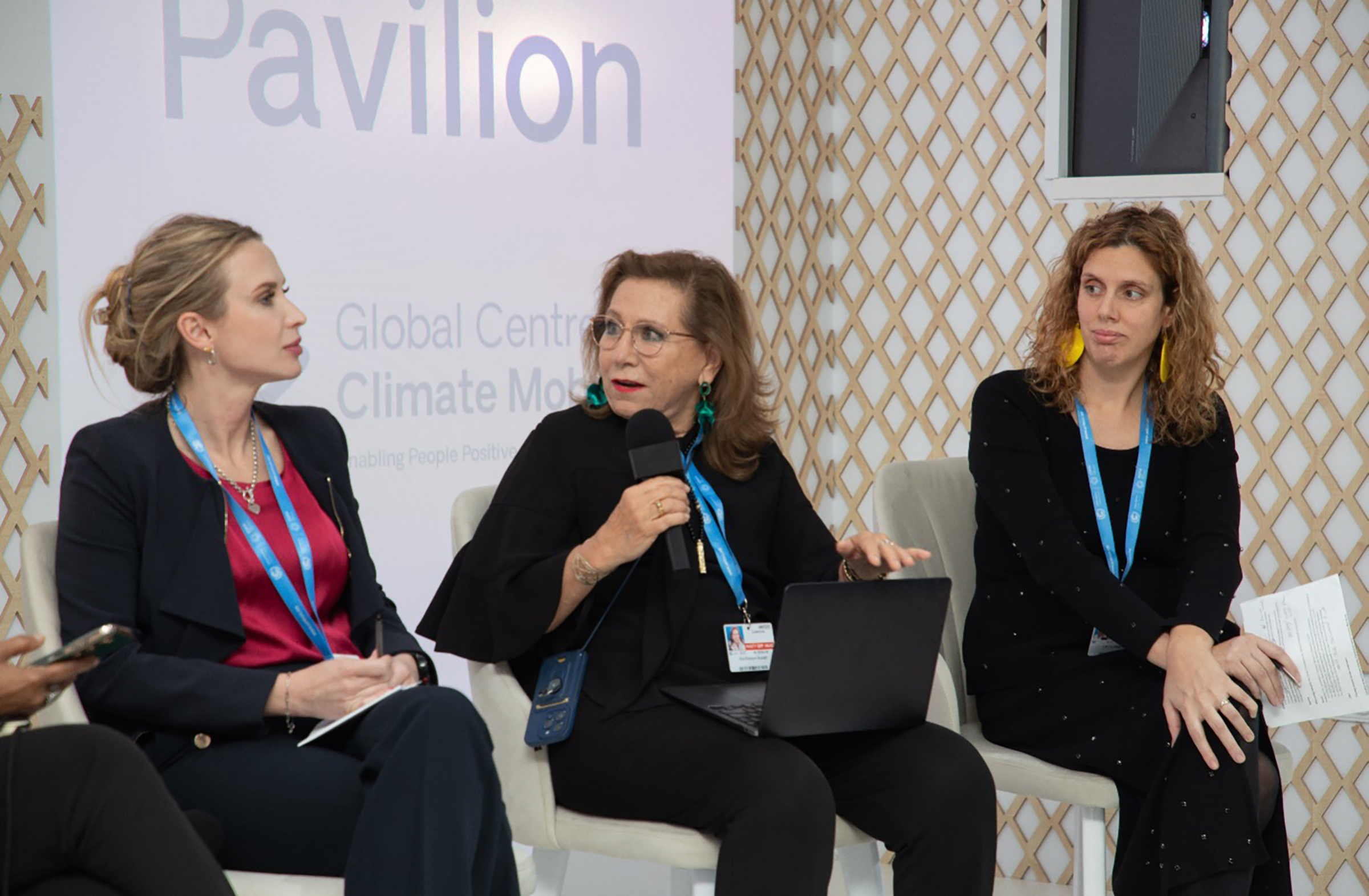
Note: Rita Mishaan, ambassador on environmental international issues of Guatemala (center), speaks on climate mobility and water scarcity at an event hosted by the GCCM. Speakers included Julia Blocher (left) and Laura Basco Carrera, senior coordinator at the GCCM (right).
Human Mobility at COP29
At COP29, the new collective quantified goal (NCQG) on climate finance — also referred to as the “Baku Finance Goal” — was agreed, committing to at least $300 billion annually for developing countries by 2035. The inclusion of migrants and refuges in paragraph 26 of the NCQG highlights the importance of addressing human mobility issues. The text is clear, “Parties and other relevant actors to promote the inclusion and extension of benefits to vulnerable communities and groups in climate finance efforts, including women and girls, children and youth, persons with disabilities, Indigenous Peoples, local communities, migrants and refugees, climate-vulnerable communities and people in vulnerable situations.” These commitments should be operationalized through concrete policy instruments and funding streams to ensure meaningful protection and support for affected populations.
Working Toward Climate-Migration Connection
Despite these advances, a disconnect remains between climate action and migration governance. While climate negotiations are increasingly recognizing human mobility, migration is still largely framed as a separate issue, addressed through distinct policy channels such as labor mobility frameworks, humanitarian protection mechanisms, and development cooperation. Bridging these gaps requires an integrated approach that connects climate adaptation, migration policy, and sustainable development agendas. It is important for governments to recognize that enhancing safe and regular migration pathways — enabling people to voluntarily relocate from high-risk areas — is both a climate policy issue and a migration governance concern.
Leadership on climate mobility within the UNFCCC ecosystem has been partly driven by the Task Force on Displacement, established under the Warsaw International Mechanism (WIM), along with a coalition of academics, practitioners, and advocates congregated around the UN Advisory Group on Human Mobility. At COP29, these actors advocated for the inclusion of human mobility considerations across three major workstreams:
- The NCQG on Climate Finance, which seeks to set financial commitments for climate action post-2024.
- The Global Goal on Adaptation (GGA), which aims to strengthen climate adaptation strategies and enhance resilience.
- The Just Transition Work Plan (JTWP), which focuses on ensuring equitable social and labor outcomes in the transition to a low-carbon economy, including protections for migrant workers.
Civil society advocates successfully pushed for the inclusion of migration, displacement, and planned relocations in the NCQG and GGA outcomes, as well as within the Gender Action Plan. Many supporters of human mobility may view COP29 as a modest step forward, as an agreement was reached that includes specific references to migrants and refugees, formally recognizing them as priorities for climate finance.
However, securing this textual recognition is only the first step. Implementation requires translating ambitious texts into tangible commitments and action. Without political will, concrete financial mechanisms, policy frameworks, and institutional responsibilities, these acknowledgments may remain symbolic rather than transformative. Ensuring effective implementation and financial allocation remains an important challenge.
Emerging Discussions on Habitability
A relatively new topic at COP29 was the concept of habitability, broadly defined as the point at which climate impacts render certain areas unlivable. As communities face increasing risks from sea-level rise, extreme heat, and natural disasters, migration can become an important adaptation strategy. Recent research indicates that habitability thresholds are socially differentiated, meaning that factors such as socioeconomic status, access to resources, and social inclusion all influence when and how people migrate.
Loss and damage discussions at COP29 did not fully address displacement risks as an inevitable consequence of climate change. Previous discussions under the Warsaw International Mechanism recognized that displacement itself constitutes a form of noneconomic loss, and other negative outcomes associated with human mobility — los of cultural heritage, social alienation, and land disarticulation — may also lead to noneconomic losses and damages. Moving forward, better integration of habitability assessments into adaptation and resilience planning will be important in addressing forced displacement and supporting dignified migration pathways.
Figure 2 — UNFCCC Conference Discussion
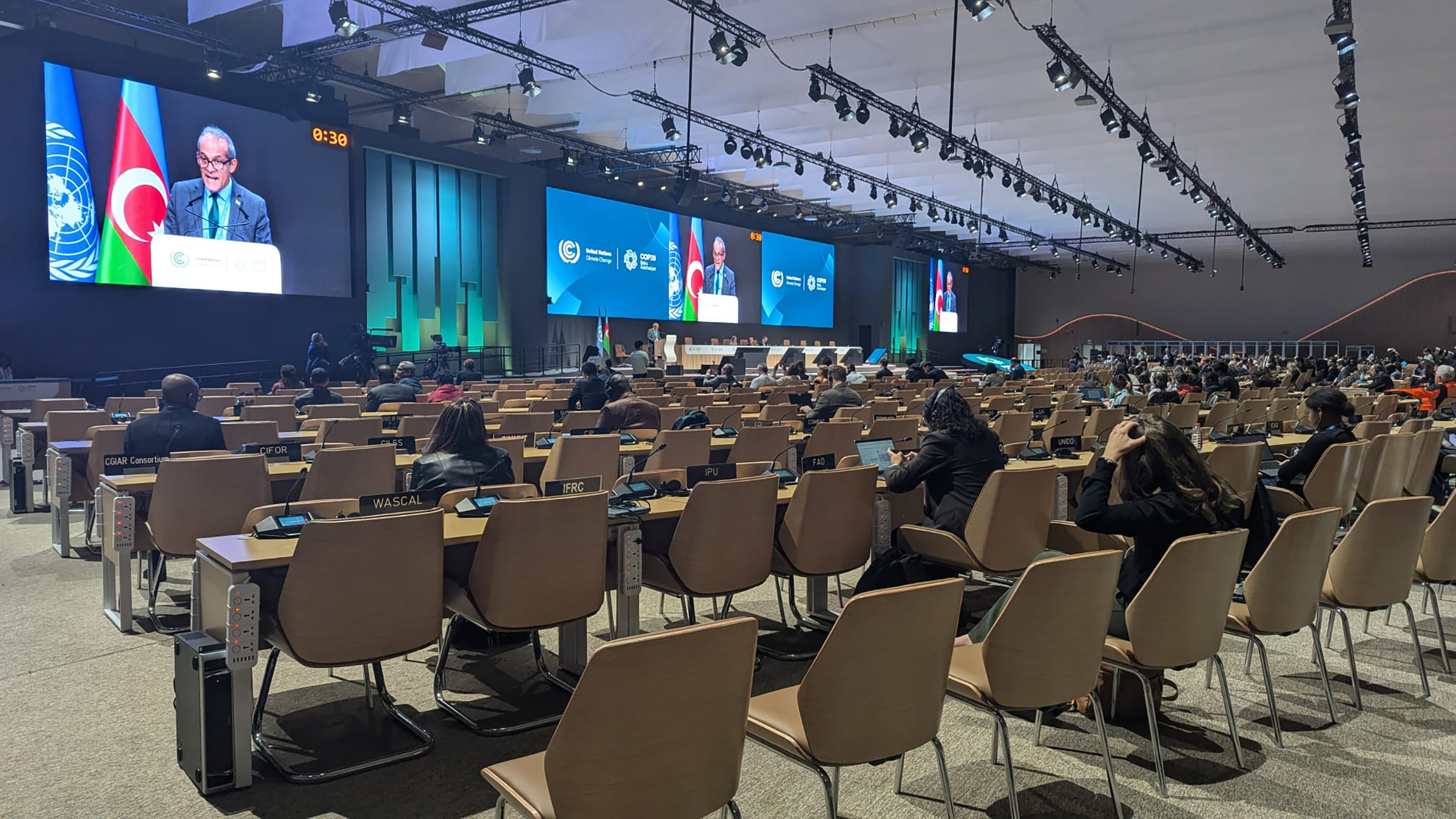
Note: International discussions on climate change at the annual UNFCCC meetings bring together government negotiators, UN officials, academics, and civil society.
Climate Finance
Backsliding from Paris? The Polarized Debate Over Climate Finance Commitments
Despite overwhelming scientific consensus on the financial needs of developing countries, divisions between countries deepened during COP29 negotiations. Wealthy nations, referred to in the UNFCCC as Annex 1 countries, proposed targets far lower than those sought by developing countries. These high-income countries initially advocated for a goal of $300 billion per year by 2035, with the EU proposing an even lower amount of $250 billion.
Developing countries, represented in part by the Africa bloc and civil society organizations, considered these amounts insufficient to address historical responsibility and climate finance obligations. The final negotiated text pledges Annex 1 countries to support developing nations with $300 billion annually, alongside an aspirational target of $1.3 trillion from public and private sources by 2035. While this represents an increase from the $100 million agreed in Paris in 2015, critics note that, adjusted for inflation, it raises the bar only marginally.
The financing structure ultimately agreed upon consists of a three-tiered and layered system aimed at reaching the $1.3 trillion per year target, an amount some top economists have deemed adequate to meet the scale of the challenge. The sources include:
- A core layer of $300 billion of governmental and public finance, primarily sourced from national budgets and overseas development assistance.
- A middle layer of innovative financing mechanisms, such as carbon taxes, levies on high-carbon industries, and carbon trading schemes.
- An outer layer of private sector investment, largely channeled into climate mitigation and adaptation projects, such as investments in renewable energy infrastructure.
One source of division was the accessibility and concessional nature of the financing, particularly for adaptation. Concessional finance offers developing countries benefits like below-market rates to support their development goals, but experts say they can also trap poorer countries in a cycle of debt dependency. The NCQG includes both concessional and non-concessional loans and grants. Developing countries argue that the requirement to repay loans for climate action hinders their ability to effectively deliver on their NDCs and national adaptation plans (NAPs), as well broader efforts toward a just and green transition.
In the final week of negotiations at COP29, a coordinated effort led to an open letter to the Group of 77 and China bloc, urging them to reject the NCQG text. The final text, adopted in the longest-ever COP overtime negotiations, ultimately retained the reference to $1.3 trillion annually by 2035, despite strong objections by developing nations. The Indian negotiator, for example, called the sum “abysmally poor” and described the outcome document “nothing more than an optical illusion.”
The New Collective Quantified Goal on Climate Finance
The cornerstone of COP29 was the agreement on a new global climate financing target through the NCQG on climate finance. This accord aims to ensure that developing countries have access to the financial resources needed to implement their climate goals. The NCQG was established by the 2015 Paris Agreement and is intended to replace the existing $100 billion per year climate finance target, which was set in 2009 at COP15 in Copenhagen, Denmark.
It has become increasingly clear that the scale of funding required to address the climate crisis far exceeds initial commitments. Ahead of COP29, civil society organizations estimated that developing countries would need between $5.1 and $6.8 trillion by 2030 to fund actions outlined in their current climate plans (NDCs). These figures were identified as necessary to stay within the 1.5-degree warming limit agreed in Paris. While these figures may seem high, they represent only approximately 1% of global GDP. The $6.8 trillion upper range was also referenced in paragraph 3 of the NCQG, underscoring the call from many parties for a significant increase in global climate finance to address the risks — some existential — posed by climate change.
Loss and Damage Fund: Unfulfilled Promises
The Loss and Damage Fund, established at COP27 in Sharm el-Sheikh, Egypt, is intended to provide financial support to countries facing climate impacts that cannot be mitigated or adapted to, often referred to as losses and damages. In addition to economic losses, such as infrastructure damage, previous UNFCCC discussions also addressed intangible and noneconomic losses, including displacement, destruction of livelihoods, and loss of cultural heritage. At COP29, a review of the work program of the WIM for Loss and Damage was conducted to chart next steps to addressing these concerns and to operationalizing the fund, which ultimately highlighted several shortcomings.
Progress Review — The review dialogue included interventions from the president of the World Bank, the presidencies of COP27 and COP28 (held in Dubai, United Arab Emirates), and the cochairs of the fund’s governing board. While these discussions highlighted progress in establishing the fund’s operational structure, they also underscored considerable gaps in its financing and accessibility. In particular, the failure to integrate the fund into the NCQG discussions was notable.
No Explicit Mention in NCQC — At COP29, civil society groups including YOUNGO (the official youth constituency of the UNFCCC) and the Women and Gender Constituency strongly advocated for the inclusion of loss and damage within the NCQG framework, preferably through a dedicated sub-goal. This would have ensured a commitment to bottom-up approaches prioritizing community-led responses, as well as accessibility and fairness in the distribution of funds. Despite these efforts, the final NCQG text included only a vague acknowledgment of “existing finance gaps,” in relation to loss and damage.
Lack of Large New Pledges — Another notable disappointment at COP29 was the absence of substantial new financial pledges to the Loss and Damage Fund, which stood in stark contrast to the enthusiasm demonstrated at COP26 in Glasgow. Sweden announced an additional $19 million in contributions, and Australia pledged $50 million, bringing total global pledges to approximately $731 million. For context, the Adaptation Fund has received over $1.25 billion since 2010, while the estimated annual costs of climate-related damages in developing countries reach hundreds of billions of dollars.
Loss and damage continues to be one of the most contentious and politically sensitive aspects of climate finance discussions within the UNFCCC and is expected to be a key point of focus at COP30 in Belém, Brazil, where the connections between Indigenous identity and noneconomic losses and damages are likely to be prominently addressed.
Reducing Displacement Risks by Improving Adaptation and Resilience-Building
In the absence of a fully operational Loss and Damage Fund, adaptation funds take on heightened importance. The Global Goal on Adaptation (GGA), established under Article 7 of the Paris Agreement, aims to enhance adaptive capacity, strengthen resilience, and reduce vulnerability to climate change. Its objective is to ensure that adaptation efforts contribute to sustainable development while responding adequately to the temperature goals set by the Paris Agreement.
Unlike mitigation targets, which have clear benchmarks (such as limiting global warming to 1.5 C), adaptation is more complex due to challenges in defining region-specific climate risks and accounting for socioeconomic disparities. At COP29, discussions on the GGA focused on defining measurable indicators for adaptation progress and ensuring greater equity in adaptation financing. Advocates noted the importance of incorporating the views of vulnerable groups, including migrants and displaced populations, for effective and sustainable adaptation planning.
COP delegates from climate-vulnerable nations, including the small island developing states (SIDS), emphasized that adaptation is not solely about strengthening infrastructure resilience but also about addressing inequalities that increase vulnerability to climate change. However, while mitigation efforts attract substantial investment, adaptation financing remains chronically underfunded. The UN Environment Programme (UNEP) Adaptation Gap Report estimates that developing countries will need $160–$340 billion per year by 2030 to implement necessary adaptation measures, yet current adaptation finance is less than one-fifth of this amount.
Effective solutions not only address infrastructure and livelihood challenges but also integrate social protection mechanisms, climate-resilient livelihoods, and mobility strategies that enable people to adapt without facing forced displacement.
- Objective 2 of the 2018 Global Compact for Safe, Orderly, and Regular Migration (GCM) commits member states to reduce the drivers of forced migration, including the negative consequences of climate change.
- The potential role of voluntary migration as a positive, transformative force for communities is also recognized. UN pavilion events on climate-induced mobility, held on the sidelines of COP29 negotiations, highlighted the growing body of evidence acknowledging migration as an adaptation strategy and migrants from climate-affected areas as agents of change.
The policy focus should therefore shift away from viewing migration as evidence of communities’ failure to adapt to environmental changes, and instead emphasize fostering conditions that allow migration to be a tool for reducing climate vulnerability and enhancing human development.
The inclusion of migrants, displaced persons, and host communities in adaptation planning through the GGA is a positive step for both people on the move and their families in origin areas. The GCA decision explicitly references migrants, children, youth, persons with disabilities, and other vulnerable groups as key stakeholders in adaptation strategies.
Human Rights and Climate Justice
Climate Finance: A Missing Link?
Observers at COP29 raised concerns about the Azerbaijan Presidency’s transparency and accountability in the decision-making process. One of the most contentious issues during the NCQG negotiations was the late removal of a carefully-crafted paragraph that intended to ensure that climate finance was allocated in a manner that respects, protects, and promotes human rights while remaining gender-responsive. The removal of this language from the NCQG text has raised concerns about the distribution and use of climate finance. Without proper safeguards, there is a risk that funds may not reach the most vulnerable communities, or that projects financed through these mechanisms could have negative social and environmental impacts.
The concerns arise from past experiences with large-scale infrastructure projects that have displaced communities and harmed local ecosystems, including those funded by multilateral development banks (MDBs). These banks are expected to play a major role in climate finance distribution under the NCQG, following the layered approach described earlier. Ensuring that climate finance aligns with human rights principles will continue to be a key challenge in future negotiations.
Youth at COP: From Advocates to Experts
Climate justice also involves intergenerational equity, a core principle of the UNFCCC that emphasizes fairness among all generations in the use and conservation of the environment and its natural resources. Young people have long been called upon in climate discussions to raise energy levels and ambitions for intergenerational equity. Today, young people affected by climate change are increasingly visible as active participants in COP meetings, moving beyond traditional advocacy roles to become integral and respected contributors to climate policymaking.
Children and youth should be recognized not only as future leaders and decision-makers but also as current diplomats, as demonstrated by the growing number of youth delegates representing their countries and regional bodies such as the African Union. Additionally, youth experts in civil society, academic, and the private sector are making significant contributions in fields such as peacebuilding, the green economy, and climate research.
At COP29, organizations like the International Organization for Migration (IOM) and the Global Center for Climate Mobility (GCCM) included dedicated youth delegates focused on climate migration. The GCCM Climate Mobility Youth Day promoted intergenerational dialogue and spotlighted the unique challenges faced by SIDS. These initiatives empower young people by increasing their participation in global climate negotiations and policy processes, while also strengthening their capacities and networks as active contributors to addressing the climate-mobility nexus.
Recommendations for COP30 in Belém and Beyond
The most vulnerable communities continue to bear the impact of climate change, despite contributing the least to its causes. They face significant challenges from migration, displacement, and relocation — affecting both the people who move and the communities they leave behind.
Planning is underway for COP30, to take place in Belém, this November, along with intersessional meetings scheduled for June. The international community should take bolder steps to translate climate finance from an abstract target into a concrete mechanism — one that supports vulnerable communities, including those affected by migration, and improve their lives while upholding their dignity, in accordance with both historical responsibilities and human rights obligations.
To ensure that governments effectively recognize, finance, and address climate-related migration, displacement, and planned relocations, the following priority areas should be focused on:
- Mitigate Emissions — High-emitting countries and historical emitters should rapidly mitigate emissions to prevent the most severe impacts of climate change, which are connected to human mobility drivers and predominantly affect historically low-emitting countries.
- Strengthen Resilience and Adaptation — Developing countries and their partners should strengthen resilience and adaptation in climate-affected regions to uphold the right to remain, ensuring that communities can live with dignity without being forced to migrate. Human mobility should be incorporated into climate finance plans, including National Adaptation Plans (NAPs) and NDCs.
- Expand Migration Pathways — Developed countries should expand safe, orderly, and regular migration pathways for people from climate-affected countries which can help raise development levels in general, recognizing migration as both a climate adaptation strategy and a mechanism for economic resilience. Moreover, specific provisions – like humanitarian visas – can be tailored for those who must move due to climate impacts.
- Ensure Transparency and Accountability — Climate finance should be transparent and equitable, with mechanisms in place to ensure funds reach affected communities directly, minimizing bureaucratic obstacles and enabling locally-relevant programs. Stronger accountability mechanisms should be established to prevent misuse of funds and ensure alignment with human rights principles.
- Integrate Climate Finance and Migration Governance — Climate finance discussions should be better integrated with global migration governance frameworks, such as the targets in Objectives 2 and 5 of the 2018 Global Compact for Migration as well as in the commitments in the 2018 Refugee Compact. Greater efforts are needed to align climate frameworks (adaptation funding, the Loss and Damage Fund) and migration governance, expanding pathways for safe, legal, and well-managed mobility.
This publication was produced on behalf of Rice University’s Baker Institute for Public Policy. Wherever feasible, the material was reviewed by external experts prior to its release. Any errors are the responsibility of the author(s) alone.
This material may be quoted or reproduced without prior permission, provided appropriate credit is given to the author(s) and Rice University’s Baker Institute for Public Policy. The views expressed herein are those of the individual author(s) and do not necessarily represent the views of Rice University’s Baker Institute for Public Policy.


