


Introduction
The long-standing opacity of hospital pricing is considered a key driver of rising health care costs in the U.S. In recent years, both federal and Texas state governments have introduced several regulations aimed at improving transparency. Notably, federal hospital price transparency rules took effect in January 2021, with the goal of reducing costs, minimizing price variation, and ultimately curbing overall health spending. Despite these efforts, significant challenges remain, and in February 2025, an executive order was issued by President Donald Trump to renew the push for greater transparency.
In October 2022, Rice University’s Baker Institute for Public Policy published an issue brief comparing prices posted by three Texas Medical Center (TMC) hospitals for 131 services covered by Blue Cross Blue Shield of Texas (BCBSTX) and 71 services covered by UnitedHealthcare (UHC). Hospitals have since had additional time to comply with federal regulations, and the Centers for Medicare and Medicaid Services (CMS) has taken enforcement actions against a select number of noncompliant hospitals. By 2025, greater price transparency compliance was expected, along with the ability to compare prices for a broader range of diagnoses and services across hospitals.
This brief revisits the websites of the four largest TMC hospitals to assess whether the expectations have been met. The analysis focuses on the price transparency files from Baylor St. Luke’s Medical Center, HCA Houston Healthcare Medical Center, Houston Methodist Hospital, and Memorial Hermann-Texas Medical Center.
Methods
Outlined below are the methods used to examine hospital price transparency data for this brief:
- Hospital price transparency files were accessed from Turquoise Health, a private company that regularly scans hospital websites nationwide and standardizes the data.
- Negotiated prices were searched using Medicare Severity Diagnosis Related Group (MS-DRG) codes or Healthcare Common Procedure Coding System (HCPCS) codes — the two primary coding systems used in insurer-hospital price negotiations.
- Negotiated Preferred Provider Organization (PPO) prices were analyzed for Blue Cross Blue Shield of Texas (BCBSTX) and UnitedHealthcare (UHC).
- Price comparisons were conducted for diagnoses or procedures with data available from at least three hospitals and for both insurers.
- Missing price information for each hospital was compared to rates at peer hospitals.
Results
There were significant differences in the number of BCBSTX or UHC PPO prices reported by each hospital.
- Baylor St Luke’s — 6,928.
- HCA Healthcare — 587.
- Houston Methodist — 350.
- Memorial Hermann — 5,313.
Most of the price files included more lines of data than the reported totals, creating the impression that prices for thousands of additional treatments were available. However, closer examination revealed numerous duplicate records for the same service.
In fiscal year 2024, CMS reimbursed hospitals for 766 identifiable MS-DRG procedures. The highest number of PPO prices for MS-DRG procedures reported by any hospital in this study was 667, observed at Memorial Hermann (Table 1). By comparison, Baylor St. Luke’s reported prices for only 35 MS-DRGs. As a result, no hospital reported PPO prices for the full set of 766 reimbursed MS-DRG procedures.
Table 1 — Number of Diagnoses or Procedures With Reported Negotiated PPO Prices for BCBSTX and UHC

In 2023, there were more than 7,000 HCPCS codes, although their usage varied widely.
- Houston Methodist did not report BCBSTX or UHC PPO prices for any of these procedures or tests in the publicly available pricing file reviewed.
- Baylor St. Luke’s reported the most, listing prices for 6,893 outpatient procedures and tests.
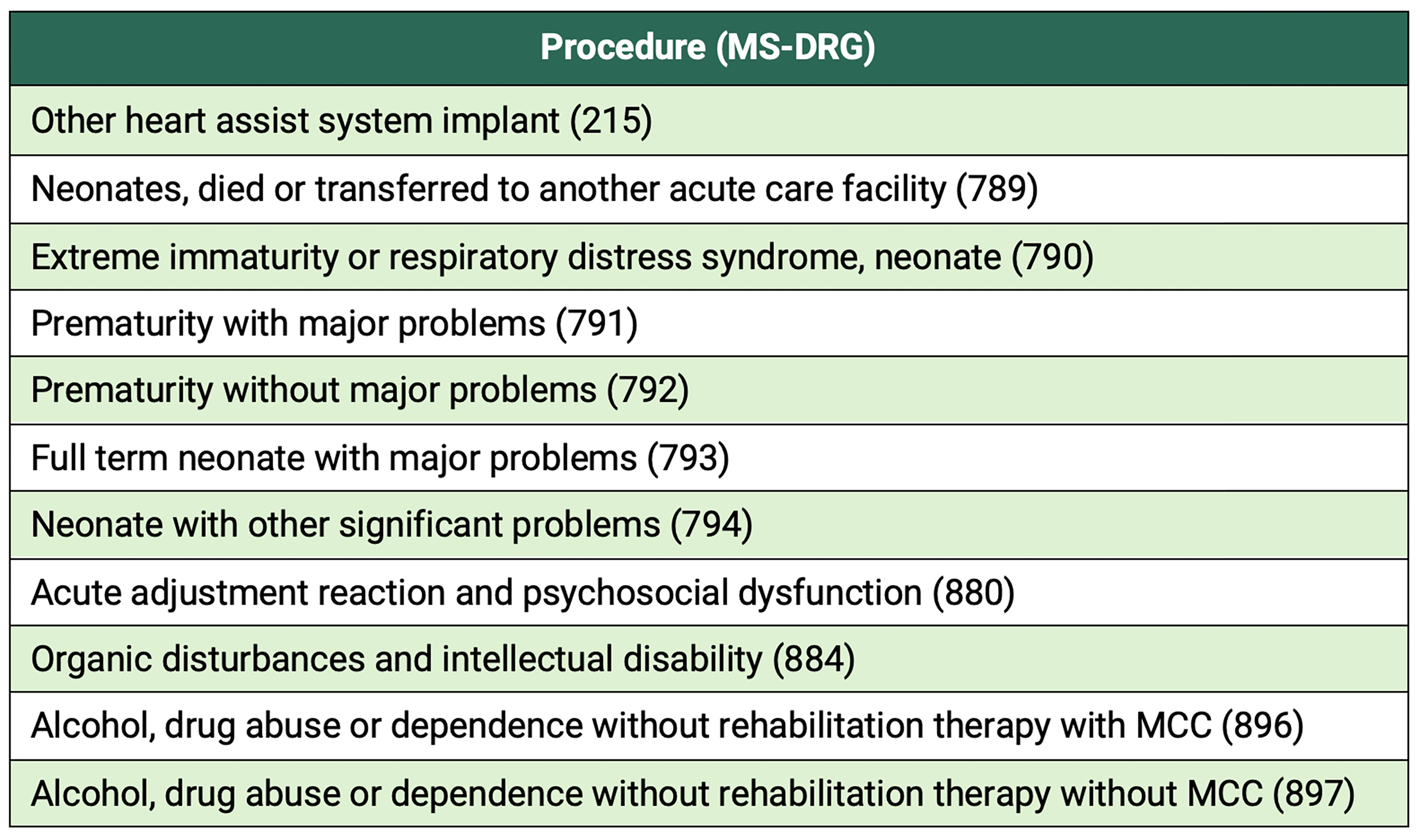
Price comparisons were possible across hospitals for only 11 MS-DRGs, as Baylor St. Luke’s provided data for just 35, limiting overlap with other hospitals. Despite this constraint, notable price variation was observed across hospitals and insurance plans (Table 2). For these 11 diagnoses, Houston Methodist’s mean price for both insurers was more than twice as high as those at Baylor St. Luke’s, with Memorial Hermann falling in between.
BCBSTX seems to have negotiated lower PPO prices for these diagnoses relative to UHC. The mean price for these 11 diagnoses for patients with BCBSTX insurance was:
- $49,211 at Houston Methodist.
- $25,478 at Memorial Hermann.
- $14,790 at Baylor St. Luke’s.
Appendix Table 1 lists the 11 diagnoses and procedures included in the price comparison. Due to the data contract with Turquoise Health diagnosis-level prices by individual hospital cannot be disclosed. However, the data indicate that the relative ranking of the three hospitals remained consistent for most — though not all — of the diagnoses.
Table 2 — Mean Negotiated PPO Prices for 11 Diagnoses/Procedures Involving an Overnight Hospital Stay

The posted prices for HCPCS codes enabled comparison of negotiated PPO prices for 467 outpatient procedures and diagnostic tests between BCBSTX and UHC across three TMC hospitals. Similarly, the data showed substantial price variation (Table 3). For BCBSTX, the mean negotiated prices at HCA Houston Healthcare, the highest-priced provider, were nearly three times higher ($1,698) than those at Memorial Hermann, the lowest-priced provider ($584). For UHC, mean negotiated prices at Baylor St. Luke’s ($1,294) were over 50% higher than those at HCA ($839), which reported the lowest mean prices among the hospitals.
Table 3 — Mean Negotiated PPO Prices for 467 Hospital Outpatient Procedures/Tests

Of the 467 procedures and tests included in the price comparison, the vast majority (464) had five-digit codes beginning with a 7 or 8, indicating that they were primarily radiology, pathology, or laboratory tests. As a result, the posted prices provide limited insight into the costs of surgical procedures or most outpatient visits involving physician evaluation and disease management. A comprehensive list of the procedure codes used in the analysis is included in Appendix Table 2.
Discussion
The findings of this analysis indicate that hospitals are not fully complying with federal price transparency regulations. Multiple instances of noncompliance were identified, which may limit consumers’ ability to access and compare pricing information.
Incomplete and Inaccessible Pricing Data Limits Usefulness
One area of noncompliance is the absence of comprehensive, machine-readable data, contrary to regulatory requirements for accessible pricing information. In many cases, procedures lack clearly stated costs for each insurance plan, making it difficult to determine potential patient expenses. For example, Baylor St. Luke’s reported prices for only 35 MS-DRG procedures, limiting this analysis to comparisons across just 11 procedures. Given that CMS reimburses hospitals for 766 distinct MS-DRG procedures, it should, in theory, be possible to compare prices for a much larger set of diagnoses. While hospitals may negotiate per-diem rates for inpatient stays, these appear to represent only a small fraction of cases.
Limited Comparability Undermines Transparency Goals
Another area of concern is the limited ability to make meaningful comparisons across hospitals. Despite the thousands of rows included in hospital price files, fewer than 500 procedures could be compared due to a high number of duplicate entries. Many of the comparable procedures were limited to low-cost laboratory tests. These limitations may undermine the goal of price transparency regulations, preventing patients from making informed health care decisions and limiting the potential for competitive pricing in the health care market.
Omission of High-Cost Procedures Reduces Transparency
Analysis of reported prices suggests that hospitals may have selectively omitted higher-cost procedures. As a result, the comparable HCPCS procedures were primarily limited to radiology, pathology, and laboratory tests, offering only a narrow view of hospital costs. Ideally, price transparency efforts would include more surgical procedures and physician-led disease management to provide a fuller picture of costs. These omissions limit that insight.
Extreme Price Variations Remain
The analysis identified significant price variations — far greater than what is typically observed in competitive markets with transparent pricing.
For example, for BCBSTX and UHC coverage for MS-DRG 896 (hospitalization related to alcohol, drug abuse, or dependence, without rehabilitation therapy but with a major comorbidity/complication), the negotiated price per patient varied widely:
- One TMC hospital’s negotiated PPO rate with one insurer was $20,000 higher than its negotiated rate with the other insurer.
- One insurer’s negotiated rate with one hospital was more than $10,000 higher than with another hospital.
These disparities highlight the extent of price variation and raise questions about the consistency of pricing practices across hospitals and insurers.
Pricing inconsistencies persist when examining average costs across of groups of procedures, reflecting broader variations in negotiated rates between insurers and providers. At HCA Houston Healthcare, BCBSTX’s average negotiated prices for 467 outpatient procedures were nearly three times higher than those at Memorial Hermann. For UHC, average prices at Baylor St. Luke’s were more than 50% higher than those at HCA.
These persistent disparities raise a fundamental question: Are price transparency regulations making any real impact? Despite years of reform, significant pricing differences remain, raising concerns about the effectiveness of both the regulations and CMS enforcement.
Conclusion
Despite the implementation of multiple price transparency policies, hospitals continue to fall short of meeting legal requirements. While these regulations have received bipartisan support, compliance remains insufficient.
The new executive order underscores the need for further government action. Without stronger enforcement, health care prices may continue to rise, and hospital costs will remain insulated from market competition. As demonstrated in this study, hospitals directly competing in the same local market are not providing transparent, comparable pricing.
The available evidence suggests significant price differences that patients and employer purchasers may be unaware of, which could undermine informed decision-making and market competition. Without timely intervention, consumers, employers, and policymakers will continue to face challenges in using transparent pricing to foster competition and control health care costs.
Appendix
Appendix Table 1 — Diagnoses/Procedures for Which Negotiated Prices Were Compared for 3 TMC Hospitals
View Appendix Table 2 (PDF).
This publication was produced on behalf of Rice University’s Baker Institute for Public Policy. Wherever feasible, the material was reviewed by external experts prior to its release. Any errors are the responsibility of the author(s) alone.
This material may be quoted or reproduced without prior permission, provided appropriate credit is given to the author(s) and Rice University’s Baker Institute for Public Policy. The views expressed herein are those of the individual author(s) and do not necessarily represent the views of Rice University’s Baker Institute for Public Policy.


