


Author(s)

Overview
Located at the intersection of several tectonic plates, Turkey is in a seismically active region with many fault lines. However, the country is not known for the safety and sturdiness of its buildings.
The Kahramanmaraş earthquake was the largest in modern Turkish history. Striking on Feb. 6, 2023, in south-central Turkey near the border with Syria, it claimed over 62,000 lives (53,537 in Turkey and 8,476 in Syria) and injured more than 100,000. The powerful 7.8 magnitude earthquake was followed by a magnitude 6.7 aftershock later that day. According to Turkey’s Disaster and Emergency Management Presidency (AFAD), approximately 280,000 buildings were either destroyed or severely damaged and more than 700,000 additional buildings were damaged.
Turkish President Recep Tayyip Erdoğan pledged a swift reconstruction campaign. The scale of destruction also prompted international organizations such as the U.N., the World Bank, and the European Bank for Reconstruction and Development (EBRD) to commit billions of dollars in resources for reconstruction efforts in the affected areas.
Issues Affecting Reconstruction
The construction industry has been a substantial driver of the Turkish economy for decades. Before the COVID-19 pandemic, the construction sector’s share of Turkish gross domestic product was more than 8%. According to International Trade Administration (ITA) data, since the 1970s the sector has undertaken construction projects worth over $453 billion in 131 countries.
Erdoğan has viewed the construction sector as central to his economic policies, which has substantially boosted the fortunes of the construction sector since Erdoğan’s Justice and Development Party (AKP) came to power in 2002.
Destruction caused by the Kahramanmaraş earthquake brings close ties between the AKP and the construction sector under scrutiny in two key ways.
- Can the Turkish government mobilize the construction sector’s capacity to accelerate reconstruction in the disaster area?
- Can the Turkish government enforce the safety standards necessary to prepare for future earthquakes?
Capacity of Construction Sector
Turkey’s construction sector has been hit hard by rising financing and material costs in recent years. Since January 2022, the average year-on-year inflation rate has remained above 40% — with much of this period seeing rates over 50%, according to the Turkish Statistical Institute (TURKSTAT). In addition, the high demand for construction materials in the aftermath of the earthquake further drove up the already high prices.
The construction cost index reflects the country’s high inflation rate, with June 2024 data showing an annual increase of 66.12%. To make matters worse, the confidence index for the construction sector remains in negative territory, at around 88 points — well below the 100-point mark that indicates a positive outlook, per TURKSTAT data.
These soaring material costs are coupled with exceptionally high interest rates. To combat rising inflation, the Turkish Central Bank raised rates from under 10% at the time of the earthquake to 50% by March 2024, where they have since stabilized. Unsurprisingly, high interest rates pose a significant challenge for reconstruction efforts, making state-backed lending support essential to ensure continued progress.
Although the government promised nearly 300,000 housing units by the end of 2023, only around 50,000 housing units have been delivered to earthquake victims. On the anniversary of the Kahramanmaraş earthquake, a new statement from the government promised the completion of 200,000 housing units by the end of 2024. However, TURKSTAT data shows that municipal building permits have seen only a modest increase since the earthquake — not an encouraging sign.
With rising costs and the slower than expected pace of reconstruction, it appears that the earthquake-prone region is likely to remain a construction zone for many years to come.
Construction Standards and Earthquake Preparedness
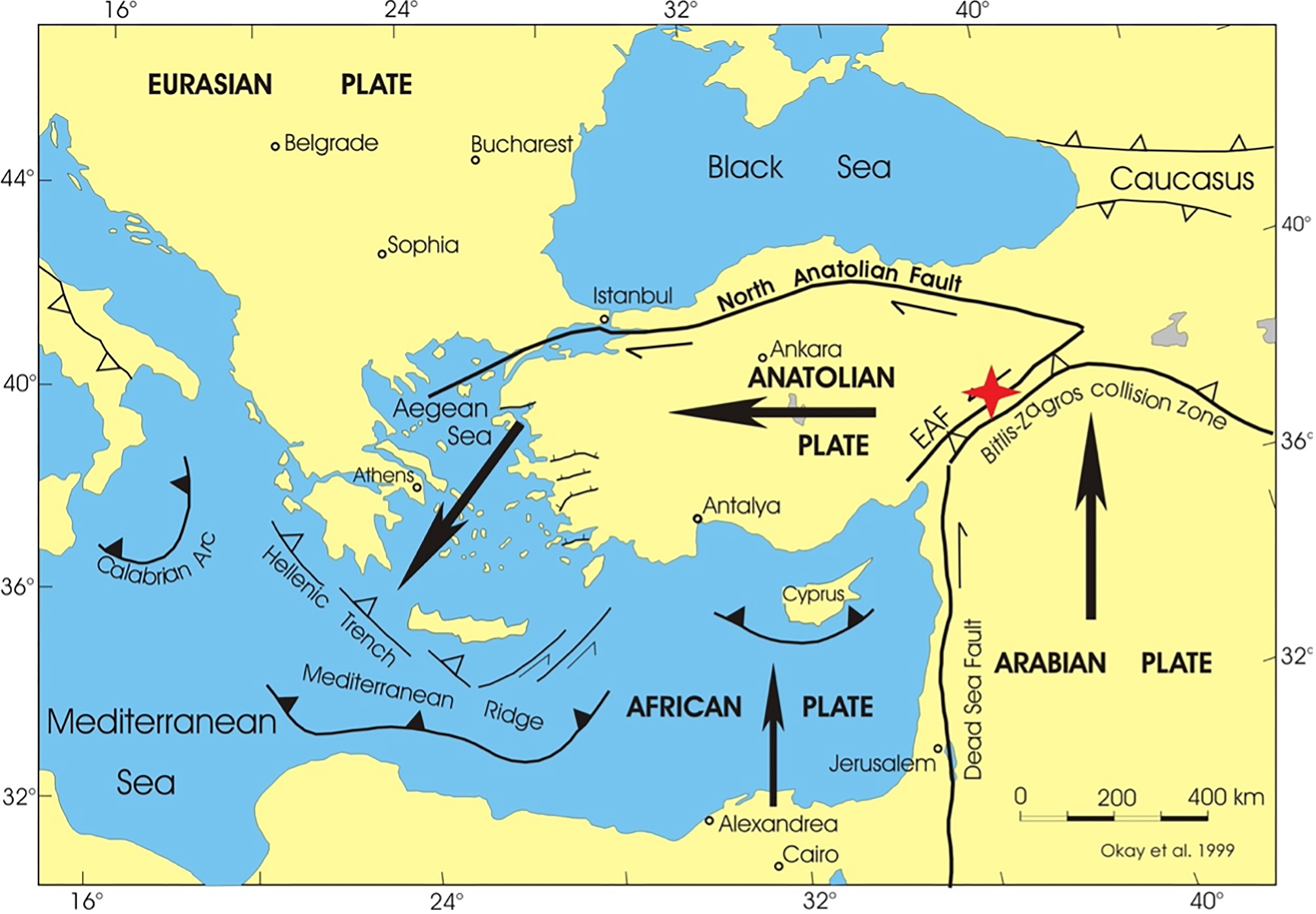
As the driver of Turkish economic development for decades, the construction industry has benefited from its privileged relationship with politicians. Given the cozy relationship between the AKP and the construction sector, can the Turkish government impose necessary safety standards to prepare the country for future earthquakes? As Turkey lies on several active fault lines, the answer to this question should be an unqualified affirmative. Figure 1 shows the fault lines in Turkey, highlighting Istanbul’s proximity to the North Anatolian fault and clearly indicating the city’s vulnerability to earthquakes.
Figure 1 — Fault Lines Around Turkey
However, rapid urban growth in Istanbul, and the rest of the country, have demanded a constant supply of new housing since the 1960s. Often these buildings are substandard, bypass inspection processes, and are constructed without building permits.
Equally troubling, more than 10 construction amnesties have been implemented in Turkey since 2001. These amnesties allow builders to sidestep critical safety regulations, with code violations effectively being forgiven shortly after project completion. This exposes residents to high risk of personal or material loss from substandard and unsafe construction.
The current situation is clear: Turkey is not ready for a major earthquake, particularly in Istanbul, the largest city. Home to 20% of the country’s population, an earthquake on the scale of the Kahramanmaraş event could decimate Istanbul. High population density and aging buildings, erected under lax standards, underscore considerable risks for those living in and around the city. Experts estimate that a 7.5 magnitude earthquake in Istanbul could result in up to 90,000 deaths, hundreds of thousands of collapsed or heavily damaged buildings, and nearly half a million families made homeless.
Policy Failure and Moral Hazard
Construction amnesties and the close relationship between the government and the construction industry have created an environment ripe for moral hazard. Turkish governments depend on the construction industry for economic growth and the rapid provision of housing for an increasingly urbanized population. This reliance, combined with a lack of accountability for substandard construction that ignores regulations and safety standards, emboldens builders to undertake high-risk projects, disregard crucial safety regulations, and frequently erect unpermitted buildings.
Such policy failure has real world implications. Istanbul’s readiness to cope with a large earthquake has been a persistent topic of public debate in recent years. Growing concern about the potential for new disasters has led to calls for government action to improve the earthquake resistance of housing stock. Currently, around 60% of Turkey’s housing stock is built to standards that predate the 1999 Izmit earthquake, which occurred not far from Istanbul and resulted in nearly 20,000 fatalities. For Istanbul alone, more than 600,000 unsafe housing units need to be replaced with earthquake-safe housing as soon as possible, at an estimated cost of approximately $50 billion.
While the Turkish government has the potential to support accelerated reconstruction in earthquake disaster areas, this would require not only financial resources but also strict oversight to ensure that rebuilding efforts adhere to modern safety standards and regulations. The challenge lies in balancing the need for rapid reconstruction with the need to avoid repeating past mistakes related to substandard building practices.
This material may be quoted or reproduced without prior permission, provided appropriate credit is given to the author and Rice University’s Baker Institute for Public Policy. The views expressed herein are those of the individual author(s), and do not necessarily represent the views of Rice University’s Baker Institute for Public Policy.


