


Introduction
From August 2022–23, there were an estimated 5,566 drug-related deaths in Texas, 45% of which involved the powerful synthetic opioid fentanyl. An estimated 43% of drug-related deaths occur with a potential bystander present — someone who may have had an opportunity to intervene or respond to the overdose.
The Food and Drug Administration (FDA) approved Narcan, a naloxone nasal spray that reverses an opioid overdose, for over-the-counter (OTC) sale in March 2023. It became available to the public without a prescription in September 2023. In July 2023, the FDA also approved for OTC sale a generic naloxone nasal spray and a naloxone nasal spray called RiVive.
Making naloxone available over the counter is meant to increase accessibility and encourage potential bystanders to carry this life-saving medication. However, individual pharmacies have discretion to decide whether to carry naloxone, the price of sale, and where to place it in the store.
Methodology
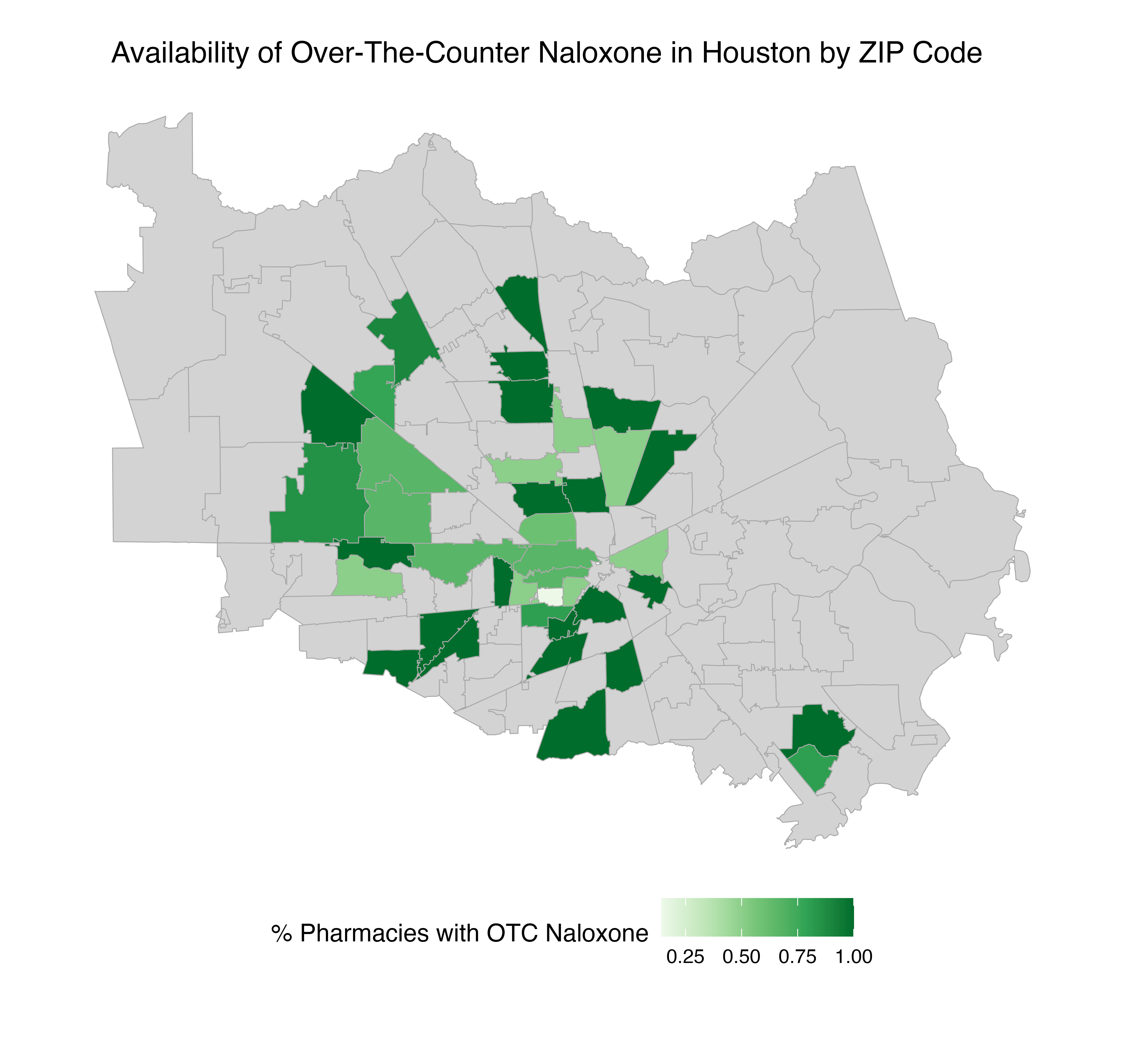
To determine how readily available OTC naloxone is in the Houston area, we called major retail pharmacies to ask about availability, brand, price, and location within the store.
To identify potential differences in naloxone availability by neighborhood wealth, we selected pharmacies in the 26 zip codes with the highest percentage of residents living below the federal poverty line and in the 26 zip codes with the lowest percentage of residents living below the federal poverty line. Some zip codes contained no major retail pharmacy locations. After removing these, 26 low-poverty and 22 high-poverty zip codes remained for pharmacy selection.
We contacted all major retail pharmacies listed for these zip codes. In total, we called and made contact with 156 Walgreens, CVS, H-E-B, Kroger, Walmart, Costco, and Sam’s Club pharmacies between Sep. 25, 2023, and Jan. 13, 2023.
Key Findings
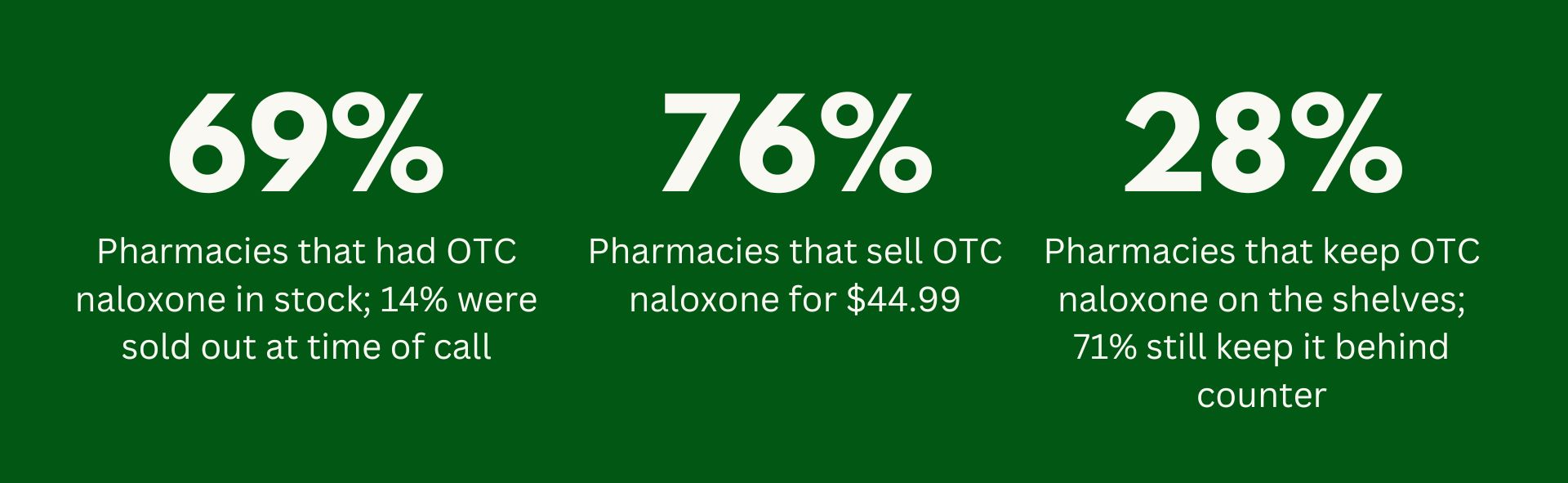
- 69% of pharmacies contacted carried some version of naloxone without requiring a prescription.
- 14% of pharmacies said they carry OTC naloxone but were sold out at the time of our call.
- Of those who reported carrying OTC naloxone, 71% said it is located behind the pharmacy counter or in another place (e.g., a locked cabinet), so an individual must request help from a store attendant.
- 45% said pharmacist assistance is required.
- 26% said cashier assistance is required.
- Three pharmacies said ID was required for purchase.
- At least one pharmacy said naloxone is kept behind the counter to prevent people from stealing it.
- 17% of pharmacies said they do not carry OTC naloxone. Of these:
- 38% said they carry it by prescription.
- 62% of pharmacies also did not carry it by prescription.
- Only four zip codes (77024, 77027, 77077, and 77098) contained multiple pharmacies without OTC naloxone; all have poverty rates of less than 10%.
- Common reasons cited for not carrying either option included the perception that few patients use it and self-reported status as a “specialty pharmacy.”
- Narcan was the most commonly available brand of naloxone, with 74% of pharmacies reporting that they carried it.
- 76% of pharmacies sold Narcan for the suggested retail price of $44.99 or close to it (e.g., $44.97, $45).
- The highest price was $163.96, at a Costco pharmacy.
Observations
- Naloxone remains behind the counter in most pharmacies surveyed.
- OTC naloxone was more readily available in high-poverty neighborhoods, though most of the pharmacies we contacted kept it in an area of the store requiring assistance.
- Individual pharmacies have significant discretion regarding whether to sell naloxone OTC and where to keep it.
- Several pharmacy employees we spoke with were unsure whether OTC naloxone was available.
Takeaways
1. Behind-the-counter policies limit access in several ways:
- People may not be aware that naloxone is available if it is not readily visible — this can reduce uptake by people who use drugs and by potential bystanders.
- People who use drugs may be hesitant to ask for naloxone due to the real and perceived stigmas against them.
2. Inconsistent naloxone policies among pharmacies within the same company can create confusion for customers regarding how to access the drug.
3. Lack of awareness by pharmacy staff about OTC naloxone availability can further hinder accessibility.
4. The state of Texas has been involved in nationwide litigation settlements against pharmacies for their role in the overdose crisis. Pharmacies implicated in this epidemic should be pressed to make naloxone more available.
5. The FDA approved naloxone for OTC sale with the goal of improving accessibility to this life-saving medication. Pharmacies can help achieve this goal by making naloxone available on the shelf rather than requiring customers to ask for staff assistance.
This material may be quoted or reproduced without prior permission, provided appropriate credit is given to the author and Rice University’s Baker Institute for Public Policy. The views expressed herein are those of the individual author(s), and do not necessarily represent the views of Rice University’s Baker Institute for Public Policy.


